Now loading...
Researchers have unveiled STARFlow-V, a groundbreaking video generation model that leverages normalizing flows to create high-fidelity clips rivaling the best diffusion-based systems, while introducing advantages like precise probability calculations and seamless support for multiple creation tasks. This innovation challenges the dominance of diffusion models in video synthesis by demonstrating that flows can handle the intricate demands of spatiotemporal data with efficiency and reliability.
At its core, STARFlow-V builds on the principles of normalizing flows, generative models known for transforming complex data distributions into simpler ones through invertible mappings. Unlike diffusion models, which iteratively add and remove noise to generate content, flows enable exact likelihood estimation and end-to-end training, making them perfect for tasks requiring probabilistic reasoning. The model, detailed in a forthcoming arXiv paper, processes videos in a compressed latent space using a dual architecture that separates global temporal dynamics from local frame details. A deep transformer handles long-range dependencies across frames in a causal manner, ensuring smooth progression over time, while shallower components refine individual frames to capture fine-grained visuals. This setup helps prevent the error buildup that often plagues sequential generation methods.
To enhance output quality, the team developed flow-score matching, a technique that trains a compact denoiser alongside the main model. This component predicts gradients of the flow’s distribution to refine noisy intermediates in a single pass, maintaining causality without relying on external tools. For faster generation, STARFlow-V employs a video-specific Jacobi iteration approach, reformulating the inversion process as solvable nonlinear equations that allow parallel updates across latent blocks. Initialization draws from neighboring frames, and execution pipelines between components, boosting speed without sacrificing coherence.
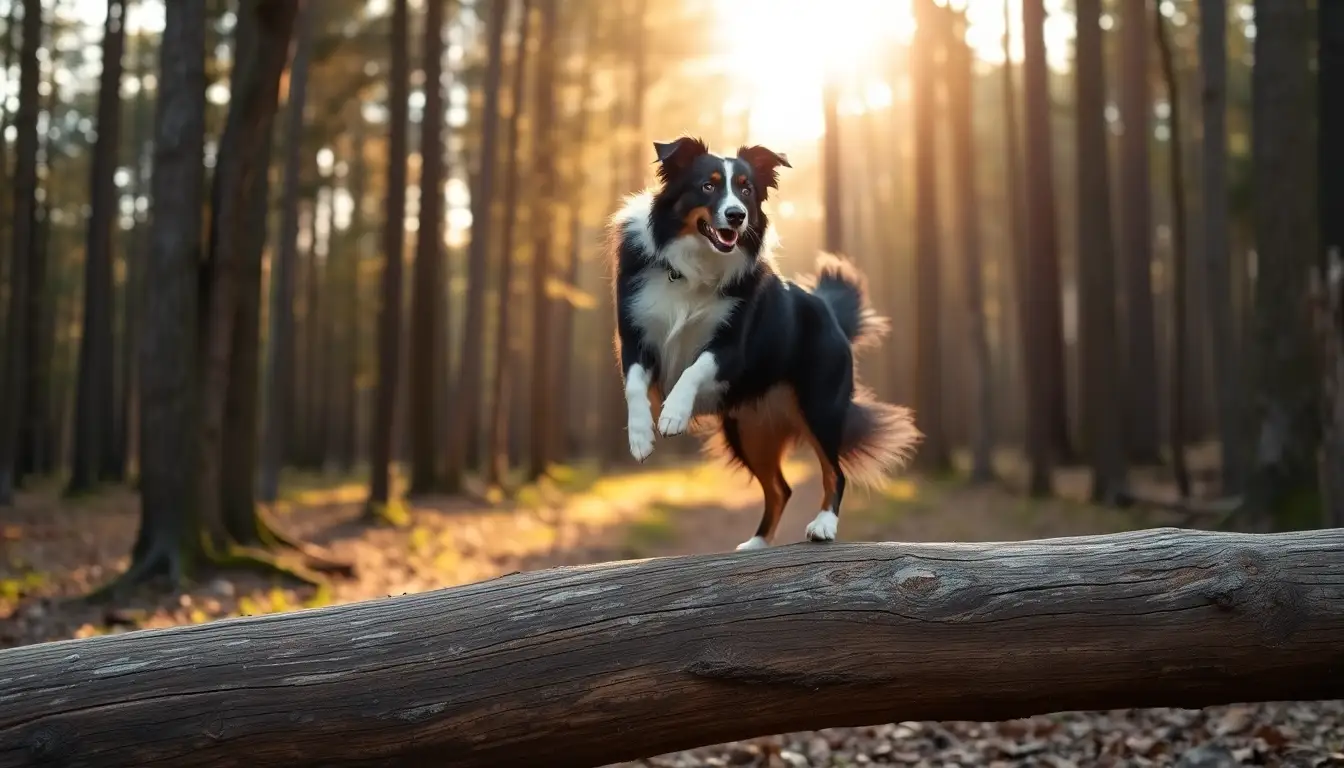
Trained on a massive dataset of 70 million text-video pairs and 400 million text-image examples, the 7-billion-parameter model produces 480p videos at 16 frames per second. Its invertible design means the same architecture supports text-to-video, image-to-video, and video-to-video generation without modifications. In text-to-video demos, prompts like a border collie balancing on a log or a chameleon rolling its eyes yield realistic, temporally consistent clips with natural lighting and subtle motions. Image-to-video extends static scenes into dynamic sequences, while video-to-video transforms inputs, such as changing an orange to a lemon or stylizing footage in Bauhaus aesthetics.
For longer content, up to 30 seconds, the model autoregressively chains segments, re-encoding overlaps to preserve continuity. Examples include extended shots of corgis in various settings or swirling koi fish, showing sustained quality over time. Comparisons against autoregressive diffusion baselines like NOVA and WAN-Causal reveal STARFlow-V’s edge in temporal stability, particularly for extended horizons, where rivals often suffer from blurring or drift. On benchmarks, it matches or exceeds them in visual metrics while offering better sampling speeds.
Despite these advances, challenges remain. The model falters on complex physics, like a dog shaking water or a skateboarder mid-flip, due to limited training resources, data quality issues, and lack of fine-tuning stages. The researchers acknowledge these as areas for future work, emphasizing that STARFlow-V represents pretraining only, without supervised or reinforcement learning refinements.
By proving normalizing flows viable for autoregressive video creation, STARFlow-V opens doors to more robust world models in AI, where understanding probabilities could enhance simulation and planning in robotics or virtual environments. The full details and samples are available on the project’s dedicated page, marking a pivotal step in generative media technology.