Now loading...
Ford Motor Co. announced plans Tuesday to launch an artificial intelligence-powered voice assistant for its vehicles later this year, with more advanced autonomous driving capabilities to follow in the coming years. The moves aim to make cutting-edge technology more accessible and worth every penny for everyday buyers.
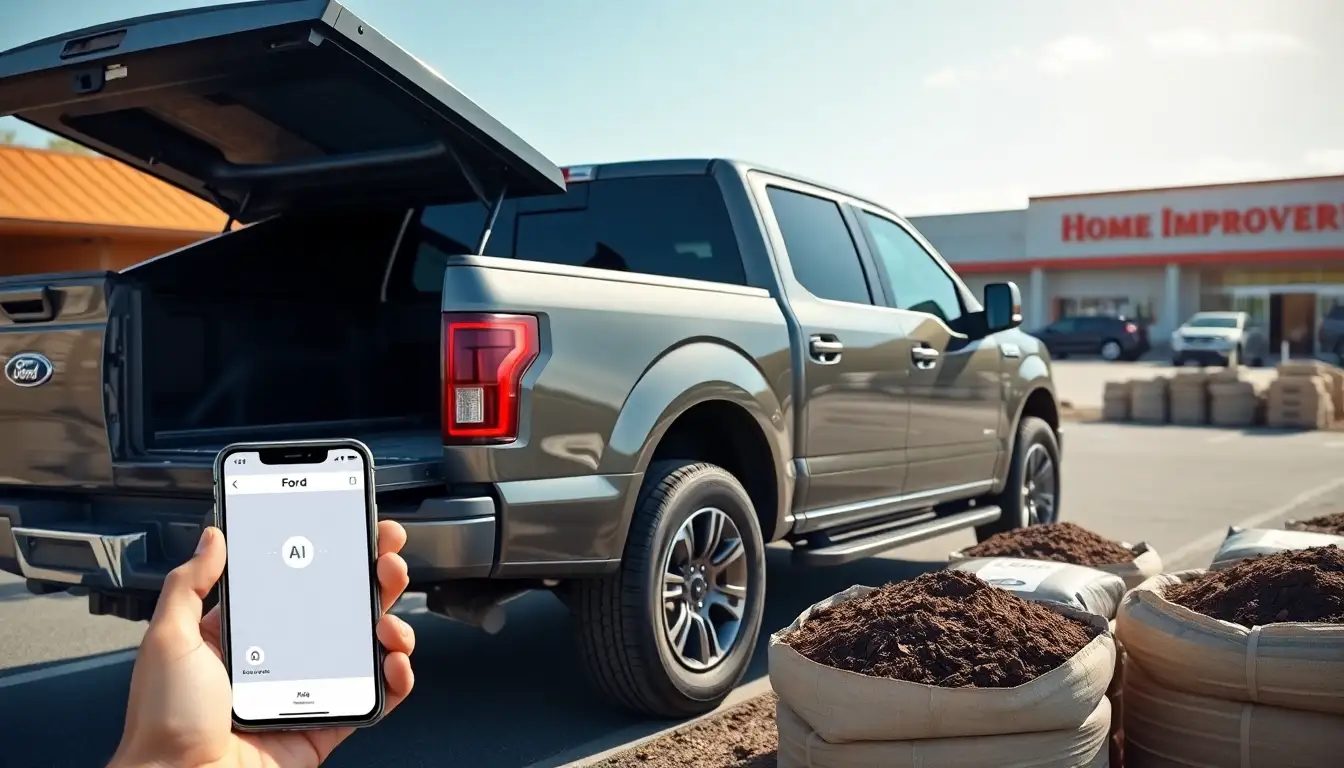
The voice assistant, designed to integrate seamlessly with Ford and Lincoln mobile apps starting in 2026 and expanding to in-vehicle systems by 2027, will provide personalized responses based on specific vehicle details. For instance, a customer could photograph bags of mulch at a store and ask how many would fit in their truck bed, receiving an accurate calculation informed by the model’s dimensions and features that surpasses generic AI responses.
Ford’s strategy emphasizes in-house development of key hardware and software components to cut expenses and maintain oversight, without venturing into creating its own large language models or custom chips. Instead, the company is focusing on compact, efficient electronic and computing modules. This approach, according to Doug Field, Ford’s chief for electric vehicles and software, enables affordable advanced features like hands-free driving in mainstream models rather than luxury ones.
By 2028, Ford plans to introduce a Level 3 autonomous system allowing drivers to take their eyes off the road in certain conditions, though they must remain ready to intervene. This builds on the current BlueCruise hands-free feature for highways and will include point-to-point navigation that handles traffic lights and intersections. The upgraded system promises 30 percent lower costs and greater functionality through rigorous optimization of sensors, software and processors.
These innovations tie into Ford’s Universal Electric Vehicle platform, slated for debut in 2027, which supports more economical electric models. The Level 3 feature will enhance this lineup amid efforts to rebound from setbacks in the EV market, including lackluster sales of the Mustang Mach-E and F-150 Lightning. Ford recently paused production plans for the Lightning electric truck as demand cooled and shifted focus toward hybrids and battery systems for booming AI data centers.
The company is charting a balanced path in AI adoption, avoiding the full-scale autonomous ambitions of rivals like Tesla while advancing voice aids and driver assistance. Ford’s assistant will incorporate various chatbots, including Google’s Gemini, by granting them access to vehicle-specific data. Sammy Omari, head of advanced driver assistance systems and infotainment, noted that this integration allows the AI to tailor advice to the exact model and configuration.
Underpinning these efforts is a comprehensive overhaul of Ford’s computing setup, creating a centralized processor for entertainment, safety features and controls. The firm has leveraged expertise from its former Argo AI partnership, ended in 2022 after a pivot from robotaxis to conditional autonomy, and a group of BlackBerry engineers hired in 2017 for connected car tech. Paul Costa, executive director of electronics platforms, highlighted the new modules’ advantages: higher power, reduced price and 44 percent smaller size, achieved by prioritizing efficiency over raw speed metrics favored by competitors.
Costa stressed the holistic improvements, saying the team optimized across multiple dimensions without trade-offs, fueling optimism for broader adoption of these technologies.