Now loading...
Boston Dynamics is teaming up with Google DeepMind to enhance its upcoming Atlas humanoid robot, aiming to make it behave more naturally in human environments through advanced artificial intelligence.
The collaboration was unveiled on Monday at the CES 2026 event during a presentation by Hyundai, the majority owner of Boston Dynamics. The effort focuses on incorporating Google DeepMind’s foundational AI models into robotics, with the new Atlas serving as the initial platform for testing, as explained by Carolina Parada, Google DeepMind’s senior director of robotics.
Parada highlighted the goal during her onstage remarks: integrating state-of-the-art AI with the updated Atlas to create the most sophisticated robot foundation model yet, capable of addressing a wide array of everyday human requirements.
This alliance builds on Google DeepMind’s introduction last year of the Gemini Robotics AI models, tailored for enabling robots to observe, think, manipulate objects, and engage with people. Drawing from the versatile multimodal Gemini AI, these models are engineered to adapt behaviors across various robotic systems.
With Hyundai’s backing, the partnership emphasizes both research acceleration and practical deployment. Boston Dynamics has already commercialized robots like the four-legged Spot, now operating in over 40 nations, and the Stretch model, which has handled more than 20 million boxes in warehouses worldwide since debuting in 2023. The company is now gearing up for Atlas’s production phase, with units en route to Hyundai’s facility in Savannah, Georgia.
A demonstration model of Atlas took to the stage, showcasing its mobility. However, Alberto Rodriguez, Boston Dynamics’ director of Atlas behavior, stressed that transforming it into a viable product demands more than physical prowess; it requires seamless, intuitive interactions with humans to realize its full potential.
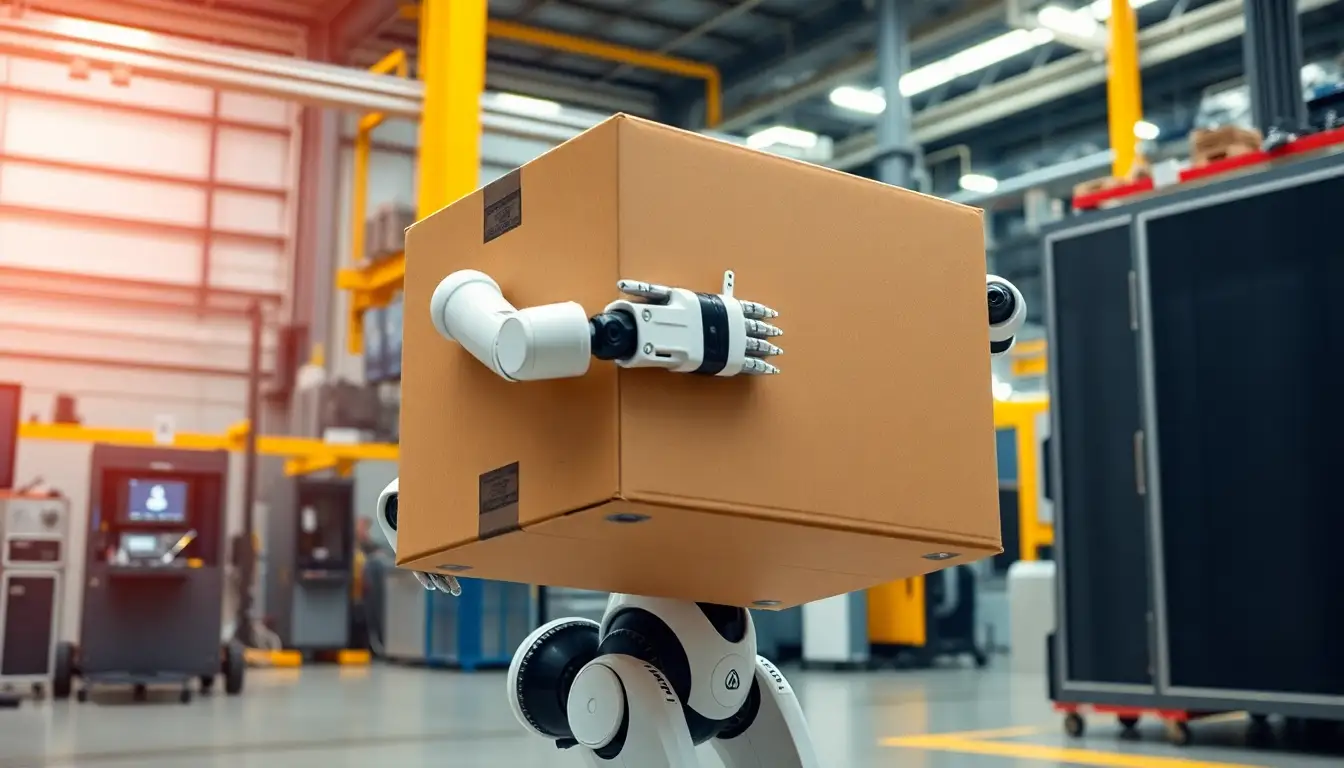
Recent AI breakthroughs offer a promising route to these features, particularly for ensuring safety in shared spaces. The production-ready Atlas boasts 56 degrees of freedom, including rotational joints and hands scaled to human size with touch sensitivity. It can hoist objects weighing up to 110 pounds and is built for consistent, repeated actions.
Such capabilities necessitate robust human-robot collaboration protocols. Hardware like Atlas’s full-surround cameras helps detect nearby individuals, but DeepMind’s contributions could refine how the robot responds and adapts.
Parada elaborated on the vision: robots ought to comprehend the physical environment similarly to humans, drawing lessons from encounters, adapting to unfamiliar scenarios, and refining skills progressively. This could mean mastering tasks from building automotive components to simple acts like fastening shoelaces, all from minimal demonstrations followed by brief practice.
Hyundai intends to integrate Atlas into its manufacturing processes this year, targeting applications such as organizing parts by 2028. To bolster this, the company is launching a U.S.-based Robot Metaplant Application Center this year, dedicated to instructing robots on maneuvers like lifting and pivoting. Insights from this center will merge with operational data from the Georgia plant’s software system to iteratively enhance robot performance.
For ongoing updates from the CES 2026 gathering, check out the event coverage.