Now loading...
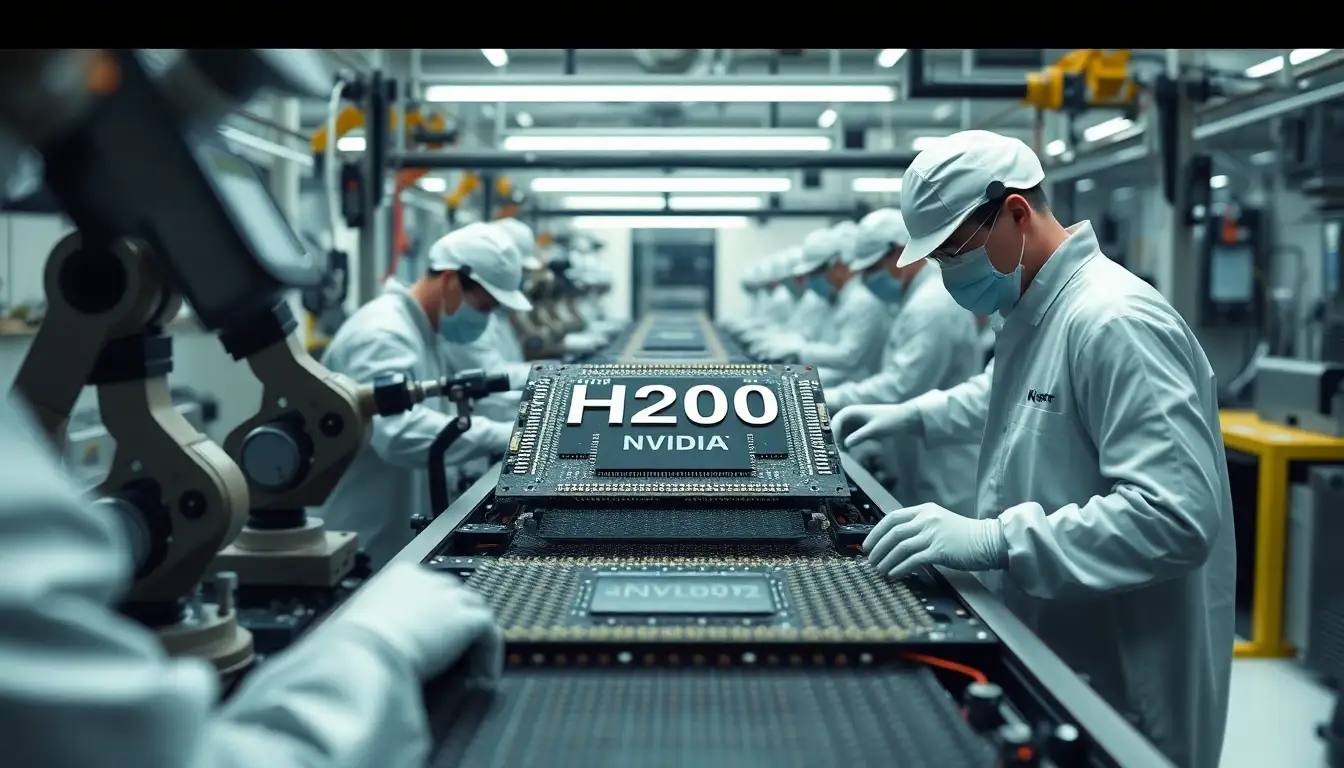
Production of components for Nvidia’s H200 artificial intelligence processors has been halted by suppliers following a decision by Chinese customs officials to prevent the recently cleared chips from being imported into the country, sources indicate.
The information comes from a report in the Financial Times, which referenced two individuals familiar with the situation. Efforts by this news organization to confirm the details were unsuccessful at this time, and Nvidia has not yet replied to inquiries submitted after standard working hours.
According to the report, Nvidia anticipated receiving more than one million units in orders from customers in China, prompting its suppliers to work nonstop in anticipation of deliveries beginning in March.
Earlier this week, officials from Chinese customs informed agents that the H200 chips from Nvidia would not be allowed to cross into the nation, as previously noted by this news service.
Additionally, officials from the government reportedly called in executives from local technology companies to caution them against purchasing the processors except in cases of absolute need.
The individuals, who requested anonymity given the delicate nature of the issue, indicated that no explanations were offered for the instructions, nor was it specified whether the action represents a permanent prohibition or a short-term restriction.
As Nvidia’s next-to-top AI processor, the H200 stands at the center of tensions between the United States and China. Chinese businesses show significant interest in acquiring it, though Beijing’s intentions remain ambiguous: it could be aiming to prohibit imports entirely to support homegrown semiconductor firms, continuing to evaluate limitations, or employing the move as leverage in negotiations.
Should the blockage prove accurate, it would complicate an already intricate landscape, including the Trump administration’s approval for exporting the US-designed and Taiwan-produced H200 chips to China, with the American government set to receive a portion of the resulting revenue. Details of this arrangement highlight ongoing policy shifts.
Subsequently, US authorities required that the finished chips route through an American facility for inspection before reaching China, enabling the application of a 25 percent duty upon entry into the United States. This measure also extends to the MI325X processor from chip producer AMD. Further reports outline the tariff’s implementation.
Opinions among specialists diverge on the wisdom of permitting H200 sales to China amid broader bilateral dynamics. Supporters argue that access to the technology could hinder China’s efforts to create comparable products and maintain reliance on American innovations. Opponents warn that the chip’s capabilities might enable its integration into military applications, potentially threatening US interests or those of its partners.