Now loading...
For years, cancer researchers have faced a formidable challenge posed by a select group of molecular switches that can ignite tumor growth and facilitate the spread of cancer throughout the body. These proteins, which have been labeled “undruggable,” present ideal targets for treatment due to their involvement in several cancer types; however, their smooth surfaces have thwarted drug development efforts aimed at inhibiting them.
Recent advancements may change this narrative. In a significant clinical trial for advanced pancreatic cancer, researchers have reported encouraging outcomes for a new drug targeting this family of undruggable proteins. The experimental medication, daraxonrasib, has nearly doubled survival rates when compared to traditional chemotherapy, while also reducing side effects. Although it does not cure the disease, the treatment extends patients’ lives by approximately 13 months and enhances their overall quality of life, with less pain reported during treatment.
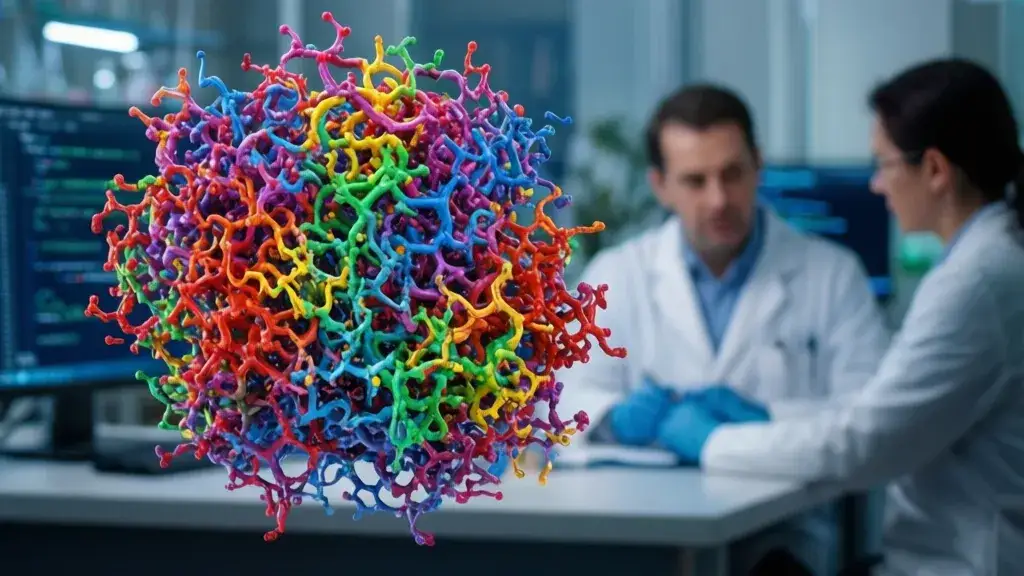
Daraxonrasib represents a new wave of drugs designed to tackle the aggressive nature of undruggable proteins, using AI-driven tools that can potentially expedite progress in this challenging area of cancer treatment.
The RAS family of proteins, which has been central to cancer research since the early 1980s, plays a critical role in cell signaling. Their mutations disrupt normal functioning, causing continuous growth and division of cells—a characteristic hallmark of cancer. Drug development targeting RAS has proven difficult due to the proteins’ smooth surfaces which do not easily accommodate conventional drug binding. Moreover, the diverse mutations that alter the protein shape have made it tough to create a universal inhibitor.
While the first RAS-targeting drug received approval in the United States only in 2021, and only for a specific subset of cases, daraxonrasib has generated excitement because it can inhibit all three RAS family members. Developed by Revolution Medicines, this innovative drug takes a unique approach by binding to a partner molecule that assists in maintaining RAS proteins’ structure, allowing it to effectively shut them down.
The trial involved 500 participants with advanced pancreatic cancer who had previously undergone extensive treatment without success. Those taking daraxonrasib lived an average of 13.2 months with significantly less discomfort compared to chemotherapy patients, who lived around 6.6 months and faced more severe adverse effects.
Although the outcomes do not match the successes of CAR T cell therapies in blood cancers, the rapid daily administration of daraxonrasib could present a more accessible treatment option, especially since RAS mutations are implicated in numerous solid tumors. This may provide a new avenue of defense against lethal cancers that have previously resisted targeted therapies.
The journey to developing daraxonrasib involved years of medicinal chemistry to refine the drug’s efficacy and safety profiles, using crystallographic insights of target proteins as a foundation. AI is set to play a transformative role in further accelerating the search for therapies against other elusive cancer targets, including the notorious p53 protein, known for its complex involvement in maintaining genomic integrity.
Scientists have been pursuing treatments to restore the normal function of p53 due to its frequent mutations across a variety of cancers. Trials indicating promising results have emerged, with efforts embracing AI-driven methods to unearth potential therapeutic candidates that engage mutated p53 while sparing healthy cells.
Research into other challenging proteins like MYC, which is abnormally active in about 70% of cancers, is also being revitalized through innovative strategies, including designer proteins aimed at disrupting MYC functionality. Recent studies are using AI to dissect MYC’s molecular interactions and devise novel approaches to combat its role in cancer proliferation.
The successful outcomes of daraxonrasib show that even the most formidable undruggable targets can be approached effectively. While the journey is still in its early stages for many similar drugs, the integration of AI in drug development signals a promising future for the fight against cancer and may one day render the term “undruggable” obsolete.