Now loading...
Researchers using Functional Generative Networks (FGNs) have made significant strides in weather forecasting, dramatically enhancing prediction capabilities while reducing computation time. Their innovative model can now produce a complete 15-day forecast in less than a minute on a TPU, allowing forecasters to rapidly assess the likelihood of extreme weather events. Last year, their system provided up to 50 simultaneous predictions, but this year, the ensemble size has been expanded to 1,000, improving the accuracy of forecasts, particularly for rare but impactful occurrences such as rapid intensification during events like Hurricane Melissa in 2025.
Traditionally, high spatial resolution has been viewed as the cornerstone of precise intensity forecasts. However, the team behind WeatherNext Cyclones has shown that a resolution of 28x28km is sufficient, a significant reduction compared to standard models. Even a more compact version, WeatherNext 2-mini, which operates at an even coarser 111x111km scale, has demonstrated impressive predictive performance, leading to intrigue among scientists who are keen to understand how such accurate forecasts can result from lower data resolutions.
In conjunction with their recent publication in Nature, the team is making their models and code publicly accessible through GitHub. This initiative is designed to facilitate collaboration within the research community and empower the development of tailored forecasting models for applications in academia, operational settings, and humanitarian efforts. By doing so, they aim to enhance weather prediction capabilities globally and improve decision-making processes that protect lives and infrastructure.
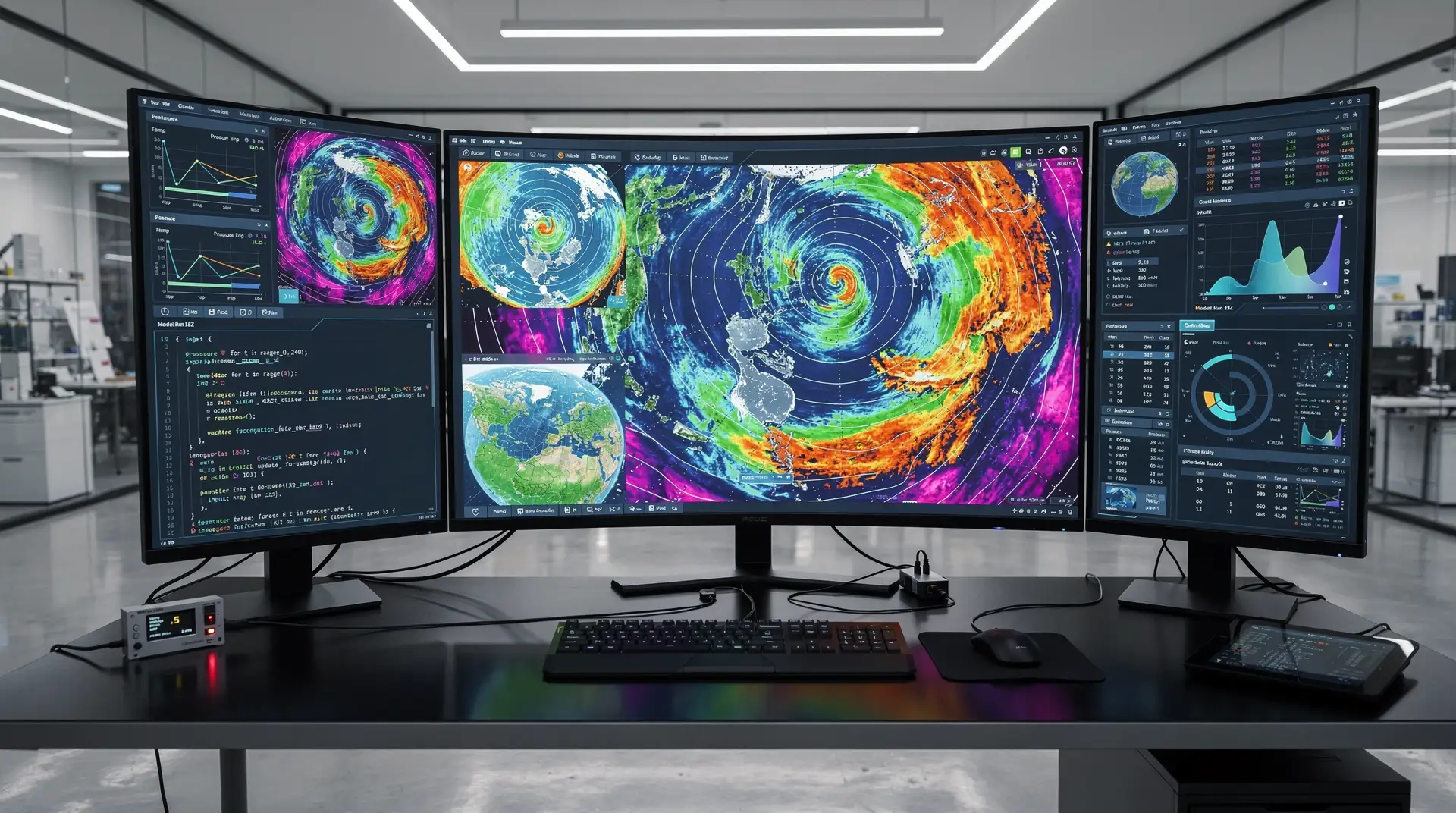
Alongside the launch of WeatherNext Cyclones, the new WeatherNext 2 models, operational since October, and WeatherNext 2-mini, which can run on a single TPU using a free Colab notebook, are also being released. Users can now visualize forecasts encompassing temperature, precipitation, wind speeds, and more through the recently updated Weather Lab, which now offers a global scope in addition to cyclone tracking. Weather Lab and WeatherNext are both integral components of Google Earth AI.
In an industry that has seen limited advancements in cyclone forecasting over the past decade, this development marks a breakthrough, granting more than a full day of additional lead time in predictions. As meteorological agencies and researchers gear up for the upcoming storm seasons, they’re encouraged to collaborate with the team, deepen their understanding of the models, and use Weather Lab for enhanced forecasting. By merging cutting-edge machine learning techniques with the critical insights of weather experts, the initiative aspires to foster a collaborative environment aimed at saving lives and aiding communities in adapting to the effects of climate change.
Note: For official forecasts and warnings, consult your local meteorological service or national weather authority.