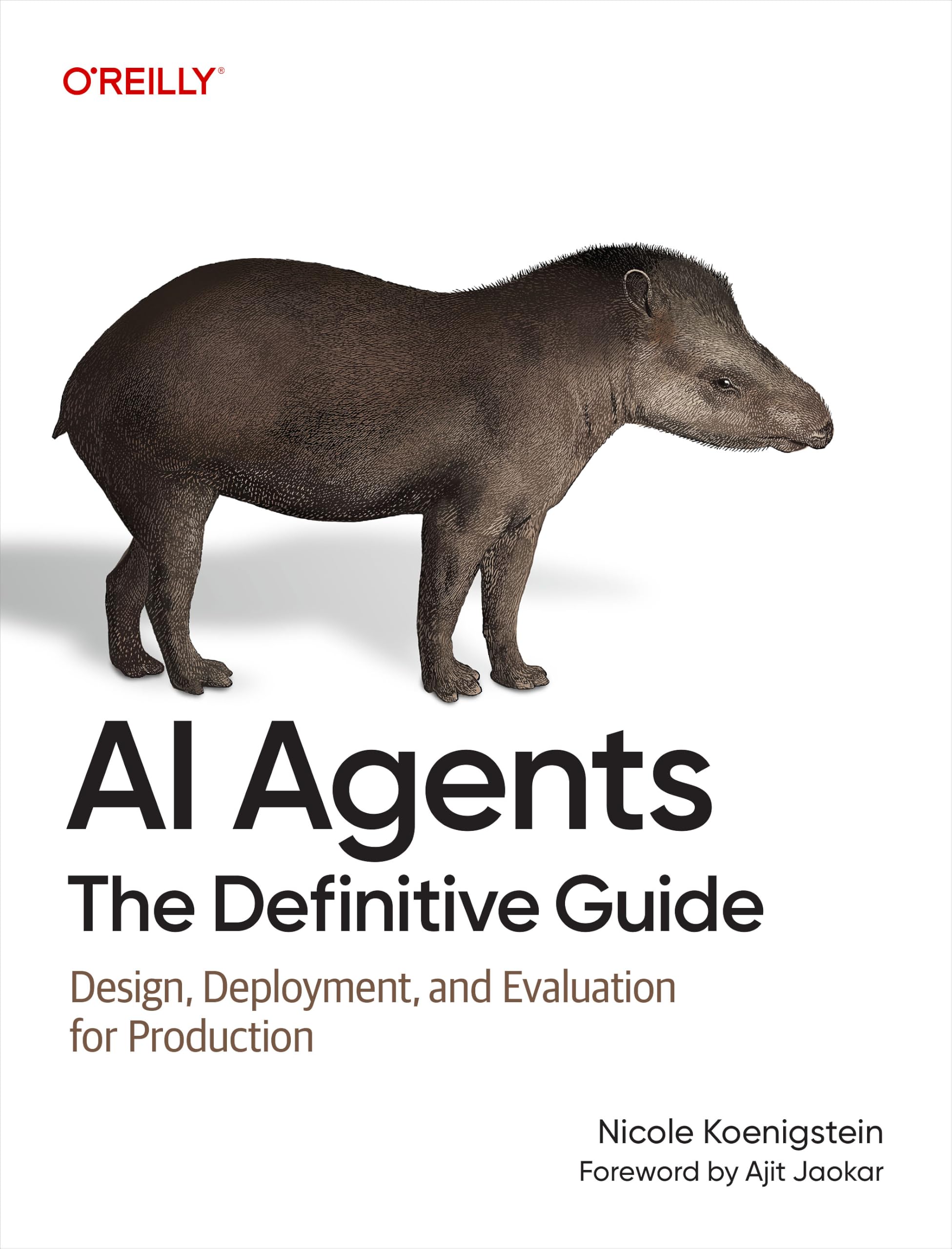
AI Agents: The Definitive Guide is aimed at a question many teams are now facing: how do you move beyond an impressive prototype and build an AI agent that can be deployed, monitored, and evaluated in real working conditions? Its focus on design, deployment, and evaluation gives the book a practical-sounding scope, with production use—not novelty—as the central concern.
That breadth is its clearest allure. Readers looking for a guide to the full lifecycle of agent development may appreciate a book that treats evaluation and deployment as essential parts of the work, rather than leaving them as afterthoughts. The subject should be especially relevant to engineers and technical leads who need to make informed decisions about where agents fit into a product and what it takes to operate them responsibly.
The title also sets a high bar. “Definitive” suggests a wide-ranging reference, so readers hoping for detailed implementation guidance will want the chapters to connect big-picture design choices with concrete engineering practice. The description doesn’t reveal how much code, case-study material, or step-by-step instruction the book includes, so it’s worth checking the sample pages or table of contents if those are priorities.
That’s likely a better fit for readers who already understand the basics of AI or software development than for someone seeking a gentle introduction to programming. It may suit:
- Software engineers exploring how agent-based systems can be integrated into production applications.
- Technical leads and architects weighing design and deployment decisions across a team or product.
- AI practitioners who want to think more systematically about evaluating agent behavior, not just building a compelling demo.
- Product-minded developers trying to understand the practical work between an agent prototype and a dependable feature.
It may be less suitable for readers who want a quick, narrowly focused tutorial or a purely conceptual discussion of AI. A broad production guide can be valuable, but readers looking for current, tool-specific instructions should also consider how quickly the platforms and conventions in this field change.
Before choosing it, ask what you need most: a framework for making design decisions, hands-on implementation examples, or a reference for deployment and evaluation. If this book delivers on all three parts of its promise, it could be a useful companion for teams building agents with real users and operational constraints in mind. If you’re still learning the fundamentals, pair it with introductory material and treat this as a next-step guide rather than a first stop.