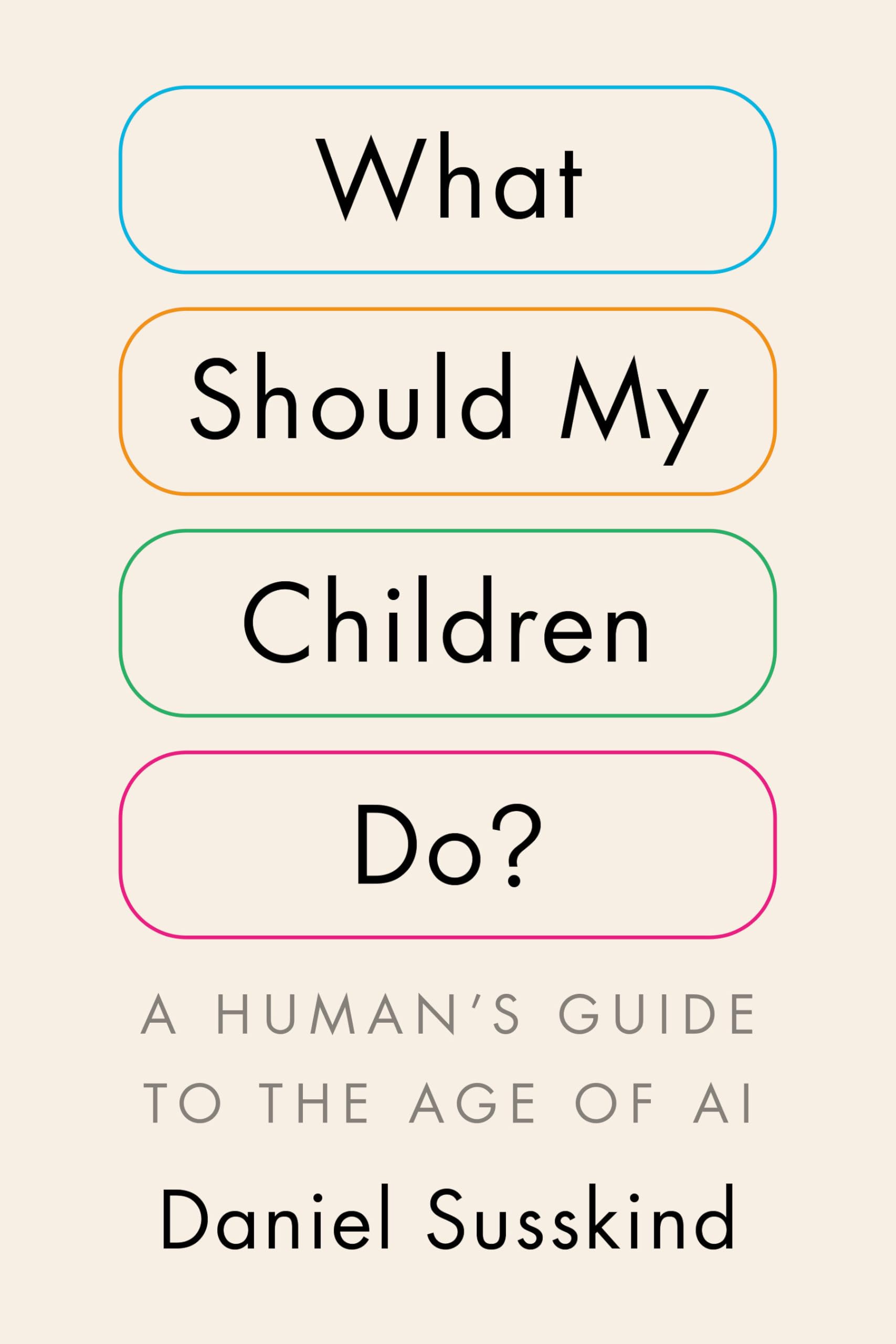
“What should my children do?” is one of those parenting questions that sounds simple until you try to answer it as preferences shift toward being reshaped by AI. The title points toward a more useful conversation than a list of supposedly future-proof careers: how to help children become adaptable, thoughtful people when the work they’ll do—and the tools they’ll use—may be hard to predict.
That framing gives the book an appealingly human focus. For parents, the challenge is not just explaining artificial intelligence or keeping up with every new development. It’s deciding what still matters when familiar assumptions about education, expertise, and employment start to feel less certain. A guide that treats those concerns seriously, without turning them into a crisis, has the potential to be both reassuring and genuinely useful.
This book is likely to be most valuable to parents who want to think beyond the usual advice to “learn coding” or choose a high-demand field. The more practical question is how to encourage qualities that can travel across many kinds of work and change: curiosity, sound judgment, creativity, persistence, and the ability to learn with others. Those are good starting points for family conversations, whatever a child’s eventual ambitions turn out to be.
For a more grounded read, bring the big question back to everyday choices. Rather than asking a child to identify a career for a future none of you can clearly see, try asking:
- What do you enjoy learning about, even when nobody is grading you?
- When a tool gives you an answer, how do you decide whether to trust it?
- What kinds of problems do you like working on with other people?
- Which skills would you like to practice because they matter to you, not just because they might look good on an application?
These questions also make the book a natural fit for readers who are uneasy about AI but don’t want fear to drive their parenting. The subject can easily become a race to prepare children for an unknowable future. A more constructive approach is to help them use new tools thoughtfully while preserving room for independent thinking, real-world experience, relationships, and play.
Readers looking for a detailed technical manual, a definitive forecast of the job market, or a step-by-step plan for choosing a career may want something more specialized alongside it. The title suggests a broader guide: one concerned with how adults can orient themselves and their children amid change. That makes it a promising choice for parents, educators, and anyone helping young people make decisions in an AI-shaped world.
The most useful answer to “What should my children do?” may begin with a better question: what can we help them learn to do well, whatever comes next?