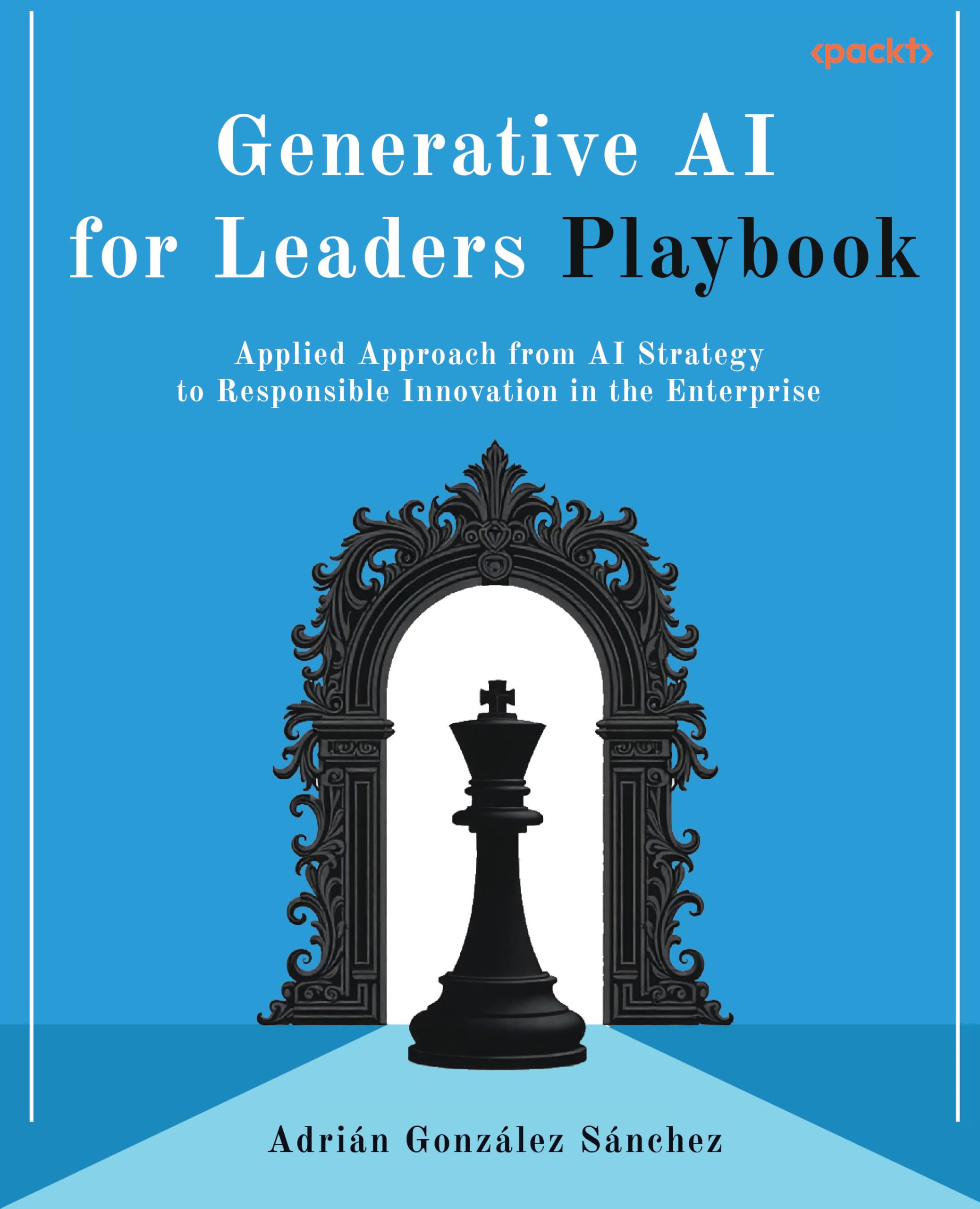
Generative AI has moved well beyond the “interesting experiment” stage, and leaders are now expected to make decisions about strategy, staffing, vendors, risk, and investment—often before they feel fluent in the technology. Generative AI for Leaders Playbook is aimed squarely at that challenge. Rather than teaching readers to build models, it promises a practical bridge between AI concepts and the choices executives need to make across an organization.
The book’s strongest appeal is its broad leadership focus. It covers generative AI and large language models, introduces agentic AI, and connects those ideas to business strategy, organizational design, product development, and governance. That combination should be useful for readers who want more than a glossary but don’t need a coding manual. The plain-language orientation is especially welcome for senior managers and decision-makers who must ask informed questions without becoming AI engineers.
The progression from understanding the technology to planning its adoption also sounds practical. Readers can expect guidance on aligning AI initiatives with business goals, building organizational literacy, developing teams, assessing vendors, and setting up responsible-use frameworks. Those topics matter because successful adoption is rarely just a matter of choosing a tool. It also depends on people, processes, accountability, and a clear concept of what the organization is trying to enhance.
Its attention to responsible innovation is another promising feature. Ethics, compliance, transparency, and governance are treated as leadership concerns rather than afterthoughts. That will be particularly relevant to organizations working across jurisdictions or handling sensitive information. The global policy and governance material may also help consultants and transformation specialists frame better conversations with clients, although readers should expect to supplement it with current guidance as regulations and tools evolve.
That’s likely to be most useful if you’re preparing to lead or advise an AI initiative and need a shared vocabulary for conversations with technical teams, executives, and business stakeholders. It may also suit founders considering where AI could change a product or business model, and managers who need a grounded starting point for workforce planning and reskilling.
- A good fit: senior managers, executives, directors, founders, AI business leaders, consultants, and transformation specialists who need strategic and operational guidance without a coding prerequisite.
- Especially useful for: organizations moving from scattered AI experiments toward a coordinated strategy, team structure, vendor process, and governance approach.
- Less suitable for: readers seeking hands-on programming tutorials, detailed model-building instructions, or a highly technical treatment of machine-learning systems.
One sensible way to use a leadership playbook like that is to read it alongside a real decision your organization is facing. As you work through the strategy, team, and governance sections, note which recommendations apply now, which require specialist advice, and which depend on your industry or jurisdiction. The result will be more useful than treating AI adoption as a checklist or assuming a single framework fits every company.
Overall, the description presents a substantial, business-facing guide for leaders who want to approach generative AI with both ambition and discipline. Its value will depend on how actionable its examples and frameworks are in practice, but the combination of strategy, organizational readiness, vendor evaluation, and responsible governance makes it a compelling candidate for anyone tasked with turning AI interest into a considered enterprise plan.