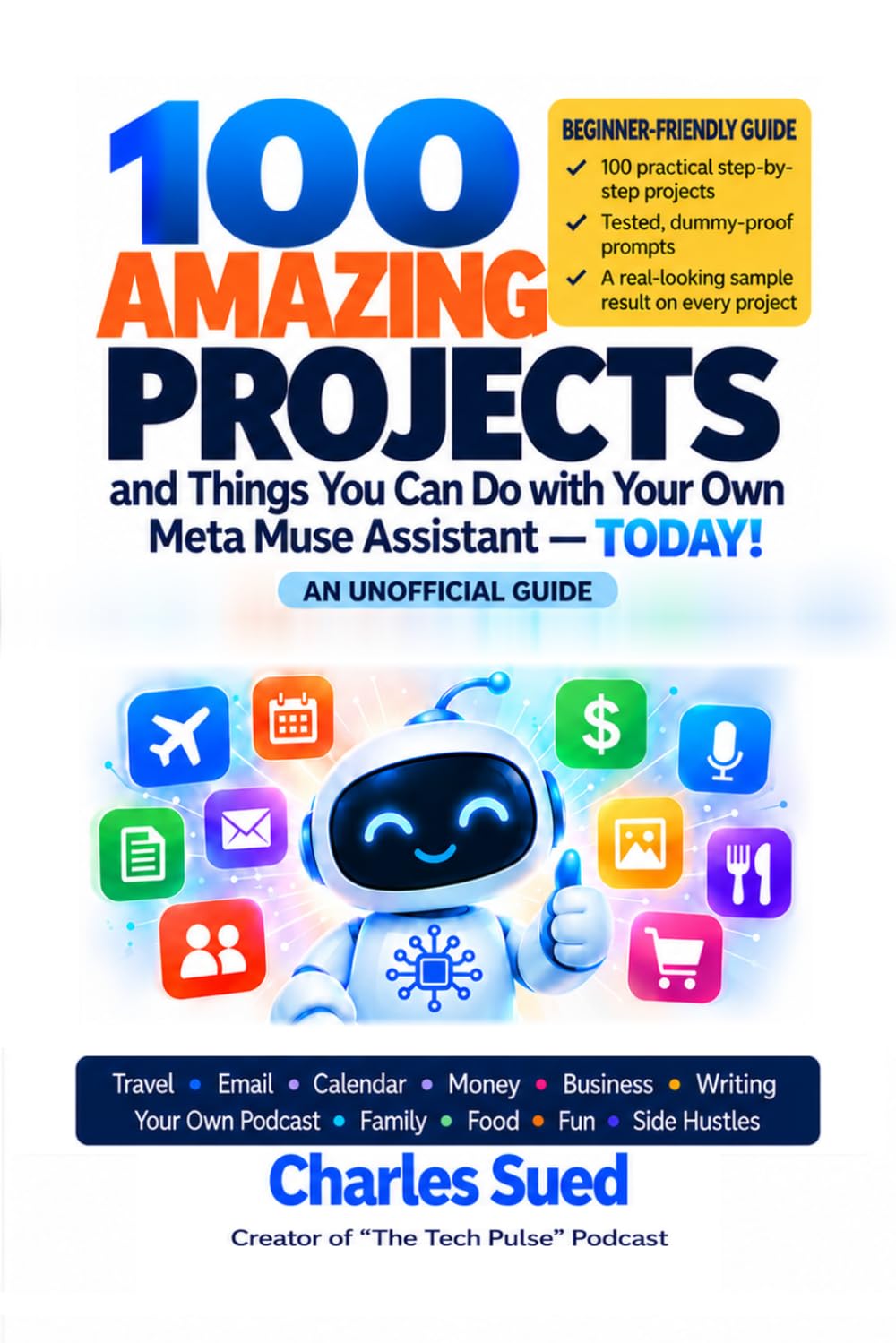
100 Amazing Projects and Things You Can Do with Your Own Meta Muse Assistant Today! is aimed at people who would rather try an AI assistant than spend hours wondering what to ask it. Its promise is refreshingly practical: 100 beginner-friendly projects, with step-by-step guidance and prompts intended to make getting started less intimidating. If Meta Muse is new to you, that hands-on approach could make the book feel more approachable than a broad, jargon-heavy introduction to generative AI.
The emphasis on ready-to-use prompts is especially appealing for readers who get stuck at the blank chat box. A prompt can be a useful starting point, but the real value of a project-based guide is showing you how to adapt it: clarify what you want, add relevant context, and ask for revisions when the first answer misses the mark. Used that way, the book’s projects could help beginners build confidence as well as produce something useful.
The large collection of ideas also suggests flexibility. Rather than following one long course from beginning to end, readers may be able to dip into projects that match a current need, then return for another when they want to explore further. That format is a good fit for curious beginners, busy self-employed people, and anyone hoping to make an AI assistant part of everyday work or personal projects.
- Good fit for: newcomers who want clear, guided ways to experiment with Meta Muse rather than an abstract explanation of AI.
- Potentially useful for: freelancers and solo business owners looking for ideas they can test against real tasks, while checking the assistant’s output before using it with clients.
- Less suited to: experienced AI users seeking technical depth, advanced automation, or a detailed comparison of different AI platforms.
“Dummy-proof” is an inviting promise, though it is worth treating it as marketing language rather than a guarantee. AI tools can misunderstand instructions, produce inaccurate information, or change how their features work. Even a carefully written prompt may need adjustment, and readers should verify important facts instead of accepting a polished answer at face value. Since that’s described as an unofficial guide, it should also be approached as an independent resource, not as an official Meta product manual.
To get the most from a collection like this, choose projects that solve a small, real problem instead of trying to complete all 100 in order. Run a prompt as written once, note what works, then personalize it with your own audience, goals, constraints, or preferred tone. Save the versions that give you reliable results, and avoid sharing private or sensitive information unless you understand how the assistant handles it.
Overall, the book’s charm lies in its promise of immediate experimentation: less theory, more guided practice. Readers who enjoy learning by doing may find the format motivating, especially if they want a broad menu of starting points. Those looking for guaranteed results or authoritative technical instruction should keep their expectations measured, but beginners seeking practical prompts and project ideas may find this a useful launchpad.
