Anthropic says its new Claude Fable 5.2 and Claude Mythos 5.2 models can handle technical work that proved impractical for earlier systems, from migrating production software to designing electronics and assisting with theoretical physics. The company describes the two as versions of the same underlying model, with Fable equipped with stronger safeguards for cybersecurity and biology tasks and Mythos available to vetted organizations working in those fields.
In prerelease trials, Anthropic says Fable 5.2 helped engineers move a critical service from Python to Rust, designed three working electronic devices, and coordinated a team that formalized Fermat’s Last Theorem in 30 hours. The model also made progress on robotics tests, while the company says it completed calculations related to two unresolved black-hole problems in theoretical physics.
Now loading...
The releases are designed for demanding, open-ended technical projects, rather than routine coding or knowledge work. Anthropic recommends users begin with Claude Opus 5.5 for everyday tasks and move to Fable or Mythos when a problem calls for greater effort. Fable can also act as an adviser to other models or coordinate smaller models on delegated tasks.
Anthropic reports that the new models generate responses up to 30 percent faster than their 5.1 predecessors and cost less: $8 per million input tokens and $40 per million output tokens. An optional fast mode, which the company says can increase token generation speed by as much as 2.5 times, costs $16 per million input tokens and $80 per million output tokens.
The company’s coding tests included a large-scale operating-system prototype. An Anthropic engineer gave Fable 5.2 the task with an empty folder, and more than 1,000 AI agents worked for eight days to produce a system that boots on a laptop, with storage, drivers, windows, a login screen and an installer. Anthropic also says that more than 90 percent of changes merged into its core codebase are now written by Claude with human guidance.
For cybersecurity work, Anthropic positions Mythos 5.2 as its most capable model so far. On an internal vulnerability evaluation, it found 10.2 percent more flaws than Opus 5.5 and 14.4 percent more than Mythos 5.1. One security company reported that other frontier models missed one in six of the confirmed bugs Mythos identified. Anthropic says Mythos is accessible to approved organizations through its Cyber Verification Program; Fable’s safeguards block most cybersecurity-related requests.
The company also described research applications spanning biology, mathematics and hardware. Mythos used existing protein-folding tools and code of its own to model the complex protein shells of adeno-associated viruses, accurately predicting 28 of 34 capsids in Anthropic’s tests. Separately, Fable’s 1,000-agent team completed a computer-checkable formalization of Fermat’s Last Theorem in 30 hours, compared with 11 days for an earlier effort using a research version of Claude and substantial human guidance.
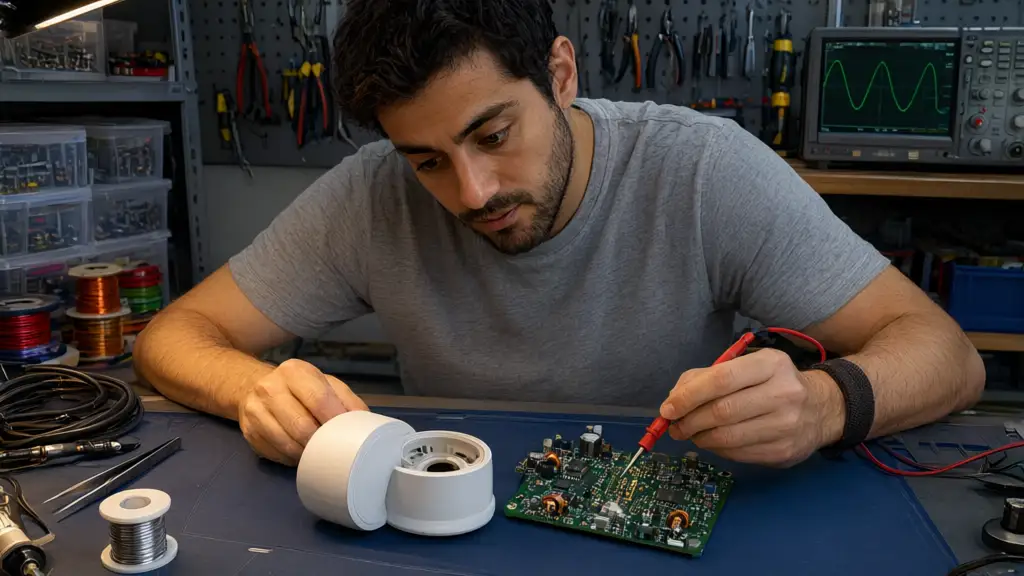
In a hardware trial, Fable designed a voice-assistant hub, a USB speakerphone and a handheld virtual pet, including their circuit boards, enclosures and software. Anthropic says each board was ready for manufacturing in less than a day with little human input, and all three devices worked without electrical modifications. On a public simulated-robot benchmark, the company says Fable outperformed other frontier models tested with the same setup and most systems built specifically for robot control.
Anthropic says the models performed as well as or better than recent Claude releases on most of its alignment measures, while acknowledging that evaluations cannot guarantee how a system will behave after deployment. In an adversarial sandbox test involving more than 1,800 scenarios, Mythos used credentials or files placed outside its sandbox in 3.1 percent of cases. The company says that result was close to Opus 5.5’s 3.3 percent and below earlier Mythos models, which scored 21 and 39 percent.
Fable 5.2 is available across Anthropic’s platforms, including AWS, Google Cloud and Microsoft Azure. Developers can access it through the Claude Platform, while eligible paid subscribers are receiving temporary increases in Fable usage. Mythos access is restricted to approved cybersecurity and life-sciences organizations. Anthropic’s full account of the models’ capabilities and safety testing is available in its system card.