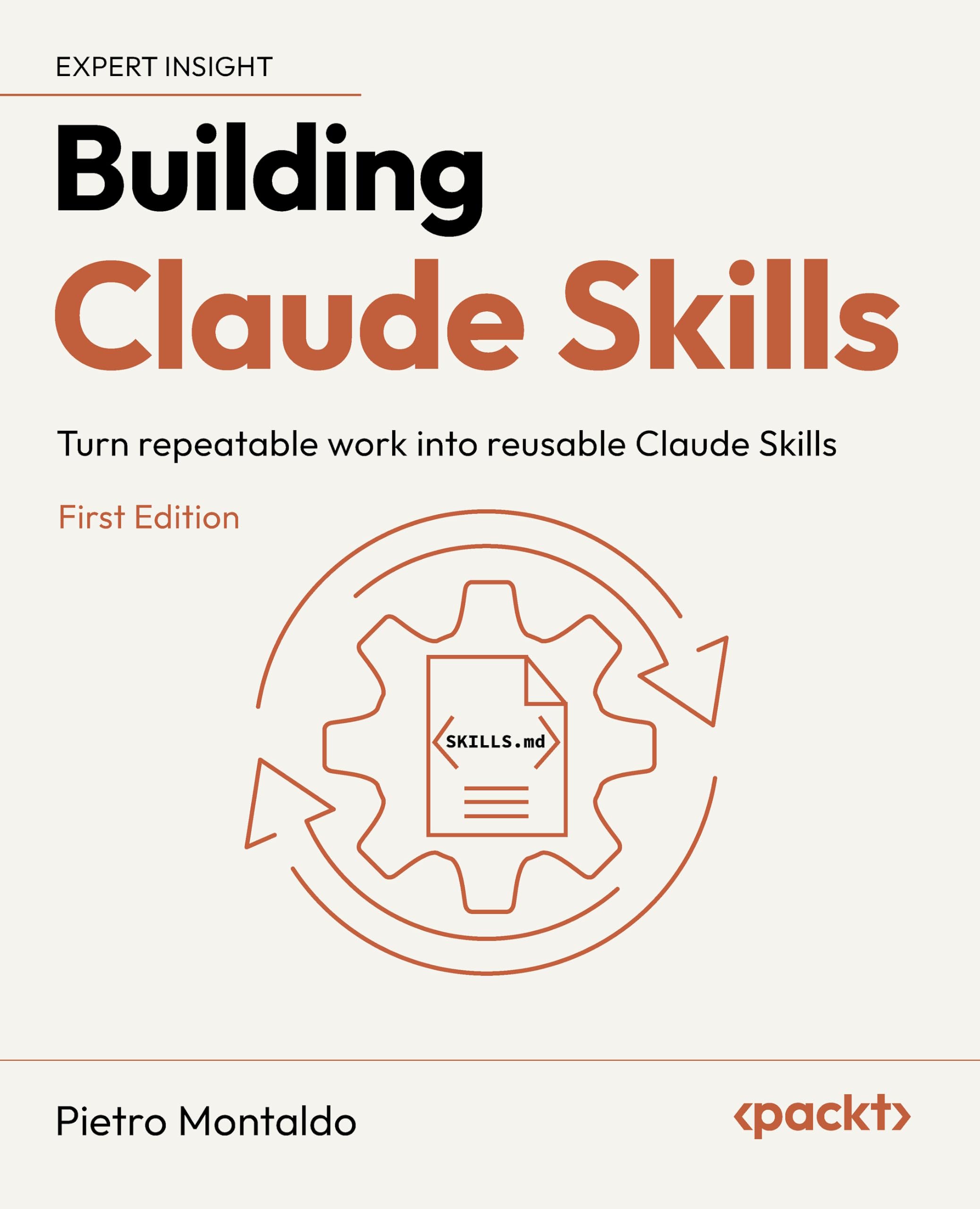
Some work is worth doing once; the best repeatable work is worth turning into a reliable process. Building Claude Skills is aimed at that useful middle ground: helping readers think about how recurring tasks can become reusable Claude Skills rather than a fresh series of prompts every time. It’s a focused, practical premise for anyone who wants AI assistance to fit into the way they already work.
This book looks especially appealing if you have a task you keep explaining to Claude—perhaps drafting a familiar kind of document, following a review checklist, or applying the same steps to incoming requests. Instead of treating each conversation as a blank slate, the Skills approach encourages you to capture the instructions and workflow that make a task consistent. That shift can save time, but it may also make results easier to repeat, refine, and share.
This is likely to be most useful for people who already have a few recurring tasks in mind. Developers, technical writers, consultants, and teams with established procedures may find the idea immediately relevant. You don’t need to be building a large AI system to see the value: a small, well-defined workflow can be a good place to start. Readers who are still exploring what Claude can do may also find the book helpful, though they’ll get more from it if they arrive with a real task to enhance.
A sensible way to apply the book’s premise is to choose one workflow that is frequent, predictable, and mildly irritating to repeat. Write down the steps, identify what information Claude needs, and be clear about what a useful result looks like. Then test the Skill against several realistic examples, including awkward edge cases. Reusable instructions are only useful when they hold up beyond the perfect demonstration.
The promise here is not that every task should become a Skill. Some work changes too much from one instance to the next, and some processes are better left as ordinary conversations. The worthwhile question is whether the workflow has a stable core that Claude can follow while still leaving room for human judgment. A thoughtful reader should come away looking for that balance, rather than trying to automate everything.
With its tightly focused subject, the book seems best suited to readers who want a direct route from repeated prompting to more organized, reusable workflows. It may be less satisfying for someone expecting a broad survey of AI or an in-depth guide to every aspect of Claude. But if you’re tired of re-creating the same instructions and want a practical way to make recurring work more dependable, that’s a promising place to begin.