Now loading...
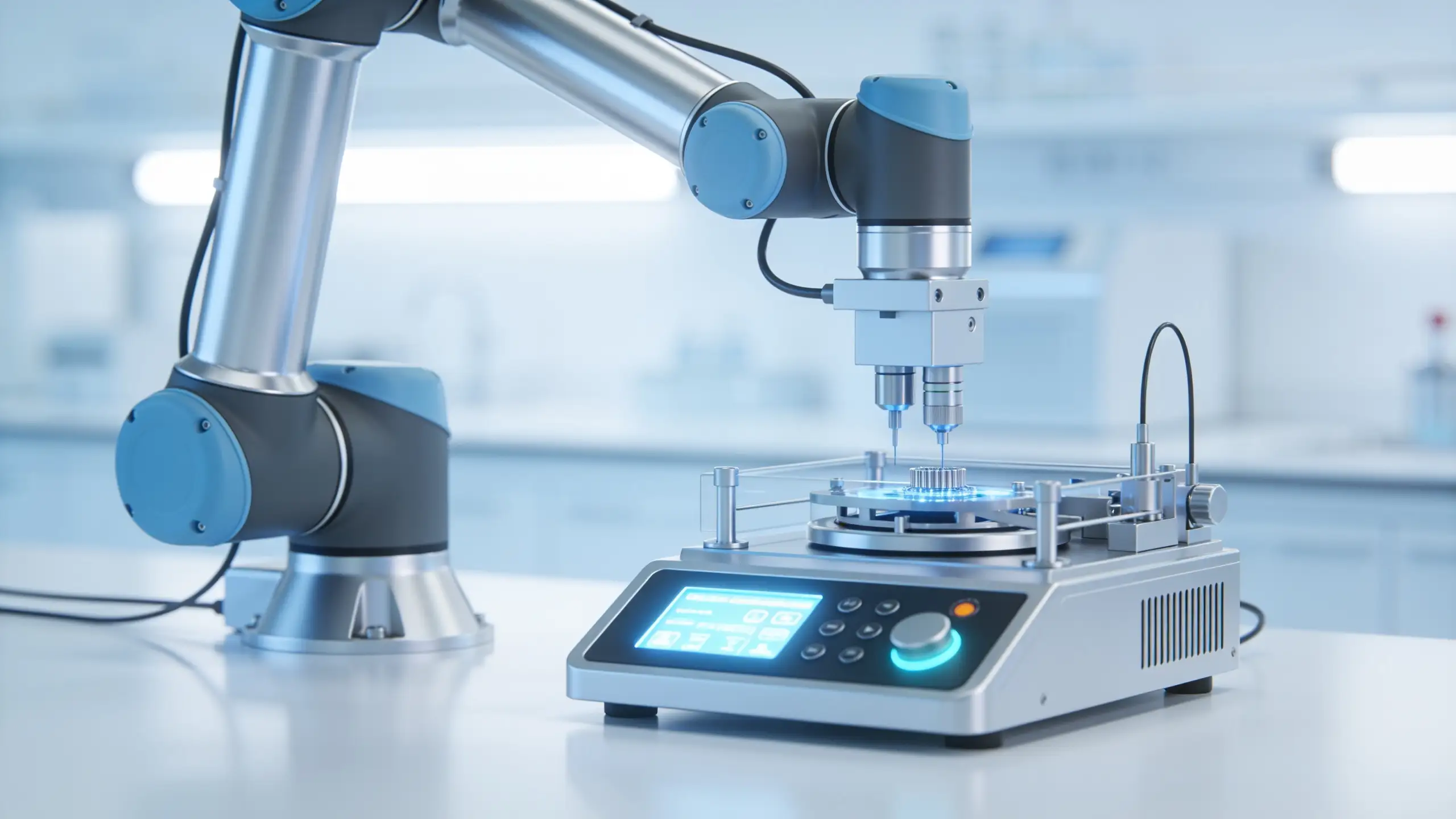
The Model Hardware Standard (MHS), designed to facilitate the safe integration of AI systems with physical devices, has launched its research preview to select scientific laboratories and advanced manufacturing entities. This initiative, developed through a partnership between Anthropic and the HHMI Janelia Research Campus, aims to streamline the operation of various laboratory and manufacturing instruments, including microscopes and robotic arms, enabling complex tasks like drug discovery and quantum computer calibrations.
Traditionally, laboratories and manufacturing facilities have faced extensive setup times, often spanning weeks to months, due to incompatibilities among devices that typically lack communication interoperability. MHS addresses this by significantly shortening integration time to mere hours or minutes. By using AI with these tools, the standard allows for the orchestration of continuous and autonomous experimental workflows, enabling agents to adapt parameters in real-time and manage hardware errors without human intervention.
A select number of partners in the fields of science, robotics, and electronics are collaborating on MHS to establish safety protocols and best practices for the application of AI systems with physical hardware. The MHS framework is compatible with any device featuring a programmable interface and adheres to standard protocols, such as the Model Context Protocol. Interested parties can request access to the research preview by visiting this link.
Integrating multiple devices in a lab setting poses challenges, particularly with the added complexity of AI integration. Each instrument usually operates on a proprietary programming interface, lacking a unified way to share data with an AI agent or handle operations safely. MHS introduces a standardized driver that simplifies this communication, employing a basic set of commands comprehensible to any hardware device. This driver detects devices in a standard format, allowing AI agents to easily find and interact with hardware across various networks.
The MHS driver is adept at understanding how to operate previously unseen devices by providing essential characteristics not easily discernible from code. Information such as a robotic arm’s weight is critical for safe operation and is now organized in an understandable format within the driver. Users can annotate this data in natural language, creating reference files that outline each device’s capacities and safety parameters, equipping the AI with the necessary knowledge to use the device effectively.
After establishing device connections, the agent employs various control mechanisms through MHS, including command-line interfaces and code files. This setup allows seamless orchestration of devices using simple commands, granting the AI agent high-level oversight and management capabilities during experiments. The agent can synchronize operations, monitor outcomes, and adapt conditions dynamically across instruments. Furthermore, the agent is capable of executing lengthy tasks or hastening processes by chaining commands, effectively enabling devices to operate autonomously.
Initial tests of MHS have revealed promising interactions, as seen with the AI model Claude, which conducts experiments in a manner akin to human scientists. Claude demonstrated the ability to modify laser settings based on observed outcomes, compiling successful techniques into a deterministic script for streamlined operations without further reasoning.
Early implementations of MHS have been undertaken by various organizations, showcasing its potential in accelerating research and experimentation in fields relying on programmable devices. Collaborative efforts have included projects at Genentech, the University of Washington, Carnegie Mellon University, and QuEra Computing, among others, where MHS has shortened device integration time and enhanced real-time operational capabilities.
Many hardware manufacturers and supporting software companies are now integrating MHS support into their products to facilitate AI interaction. Notable players, including Amazon Web Services and Danaher, are prioritizing MHS compatibility to improve automation and efficiency across diverse applications.
While initial results from partner organizations are encouraging, further development of MHS is essential before transitioning to open-source. Although Claude learns about the physical world through textual inputs, its understanding still requires expert oversight in certain scenarios, such as identifying physical errors. MHS is currently limited to devices with a programming interface, necessitating ongoing efforts to incorporate MHS drivers in more hardware types. Companies like Hugging Face and Raspberry Pi are already exploring MHS implementations in their robotics solutions.
The upcoming research preview will also focus on establishing enhanced safety evaluations, with partners working to fortify safeguards against potential misuse of AI in physical contexts. Stakeholders are encouraged to express interest in participating in the MHS research preview by visiting this portal.
The inception of MHS arose from a collaboration aimed at improving the communication of diverse laboratory equipment used in complex experiments at HHMI Janelia. Anthropic’s Beneficial Deployments team has been pivotal in developing this integration, supported by contributions from various individuals dedicated to advancing this technology. Ongoing collaboration with industry partners and the open-source community will be crucial for the future of MHS.