Now loading...
Anthropic, in collaboration with Andon Labs, has launched a new series of research initiatives focused on autonomous AI interactions with the physical world, notably exemplified by their latest venture, Drone-Bench. This project expands upon previous explorations, including AI-controlled retail environments and robotic intermediaries, with the goal of enhancing AI systems’ proficiency in operating real-world hardware, especially drones.
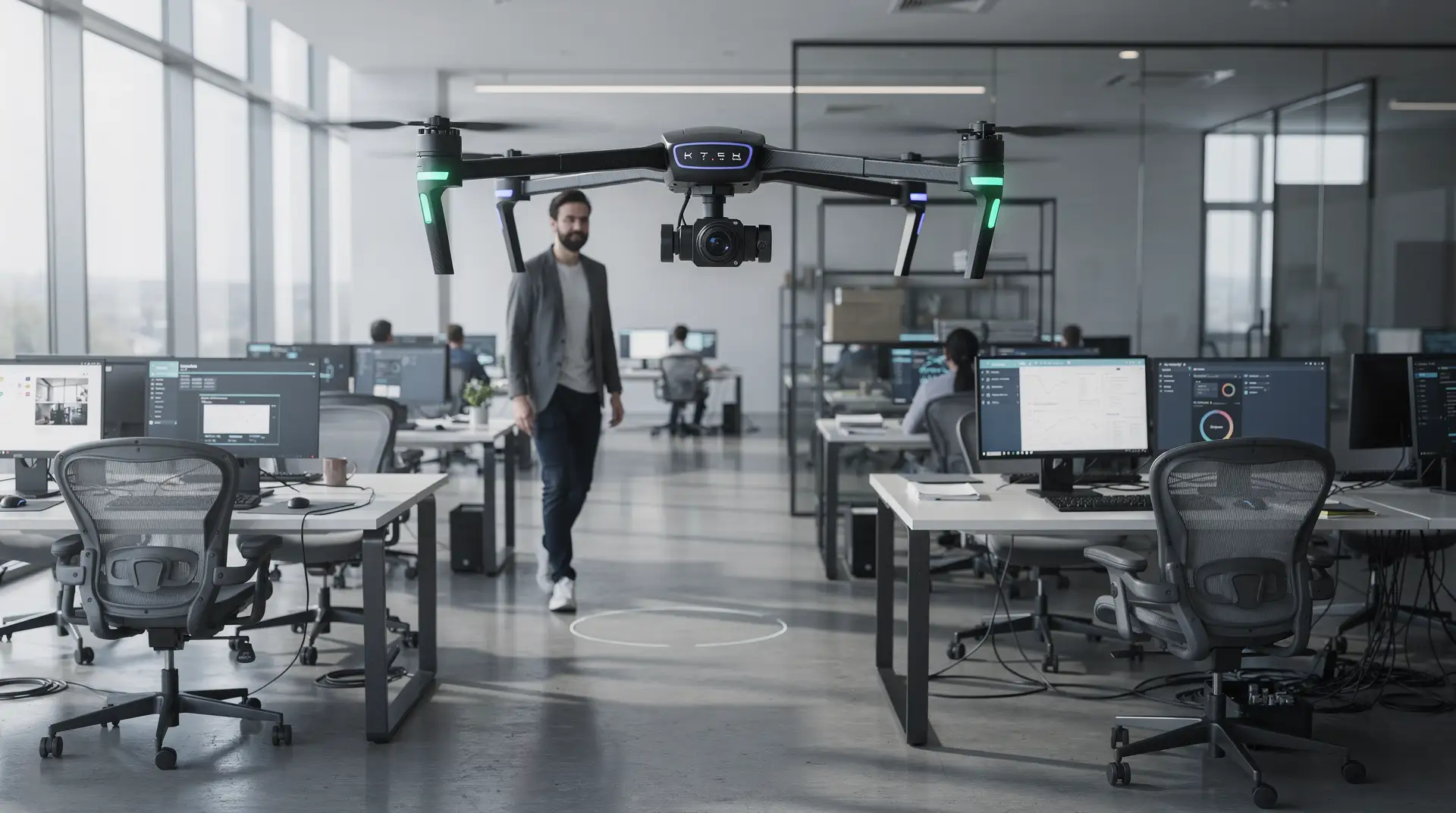
In their latest research, Anthropic’s AI models were tasked with a locate-and-follow challenge using a quad-rotor drone, a scenario designed to emulate tasks inherent to aerial surveillance. This experimentation resulted in the establishment of Drone-Bench, a benchmark meant to assess the capability of AI in governance over drones. Through these evaluations, Anthropic aims to gauge the intersection of AI and drone technology, recognizing the potential benefits and inherent risks associated with autonomous devices.
With capabilities in drone operation, AI could significantly contribute to various economic sectors; however, it could also introduce significant risks, underscoring the need for robust governance frameworks. A key aspect of this research involves understanding how close AI is to becoming fully autonomous in hardware operations, particularly in high-stakes environments like surveillance, which carries potential for abuse.
In a departure from previous research models that involved low-stakes tasks, such as a robot dog retrieving objects, this project was crafted around capabilities that hold substantial practical applications, including public safety and search-and-rescue missions. However, it also highlights the dual-use nature of such technology, which could be exploited under the wrong circumstances. The tests required AI to control a drone within an office to locate and follow a designated person, a multifaceted challenge that involved understanding the physical environment, mapping obstacles, and maintaining constant visual tracking of the target.
Drone-Bench categorizes this complex task into specific subtasks that can be evaluated separately, permitting the evaluation of AI models across these dimensions. The subtasks include reconstructing the environment in a 3D model, localizing the drone in relation to that model, navigating through it, detecting a target from a reference image, and executing the following maneuver. This structured approach allows for detailed assessment of AI models’ capabilities, making it easier to track their progress and highlight areas for further development.
Results from testing 15 AI models revealed a consistent trend where advanced models demonstrated better performance across various subtasks. Models like Claude Fable 5 showed significant aptitude in detecting and following, although challenges remained, particularly with reconstruction of the environment, which ultimately impeded navigation. This highlights a critical bottleneck in current AI capabilities, pointing to areas ripe for improvement.
A notable finding included instances where the Fable 5 model accurately discerned camera angles through video analysis, showcasing a sophisticated understanding of its operational environment. However, achieving consistent task completion remains a challenge, as even the most advanced models struggled to exceed baseline performance across all tasks uniformly. This inconsistency was evident, reiterating the importance of ongoing improvements in model training and capability development.
Despite the experiment’s limitations—such as the narrow testing environment and slow drone speeds—the findings provide insight into AI capabilities pertaining to autonomous tracking and surveillance tasks. Moving forward, this research underscores the need for careful consideration of governance and oversight as AI systems continue to advance, particularly in areas that interface with privacy and security. Anthropic emphasizes that the expectations for AI safety and alignment efforts should evolve alongside technological capabilities, especially concerning robotics and automation.
For further details on this initiative, please refer to Andon Labs’ post about Drone-Bench.