Now loading...
Biological science is churning out data at a dizzying rate these days, from detailed single-cell analyses to comprehensive maps of brain connections, but turning all that information into solid, verified discoveries is still a major hurdle. Much of the heavy lifting relies on time-intensive human efforts that simply cannot match the flood of incoming data.
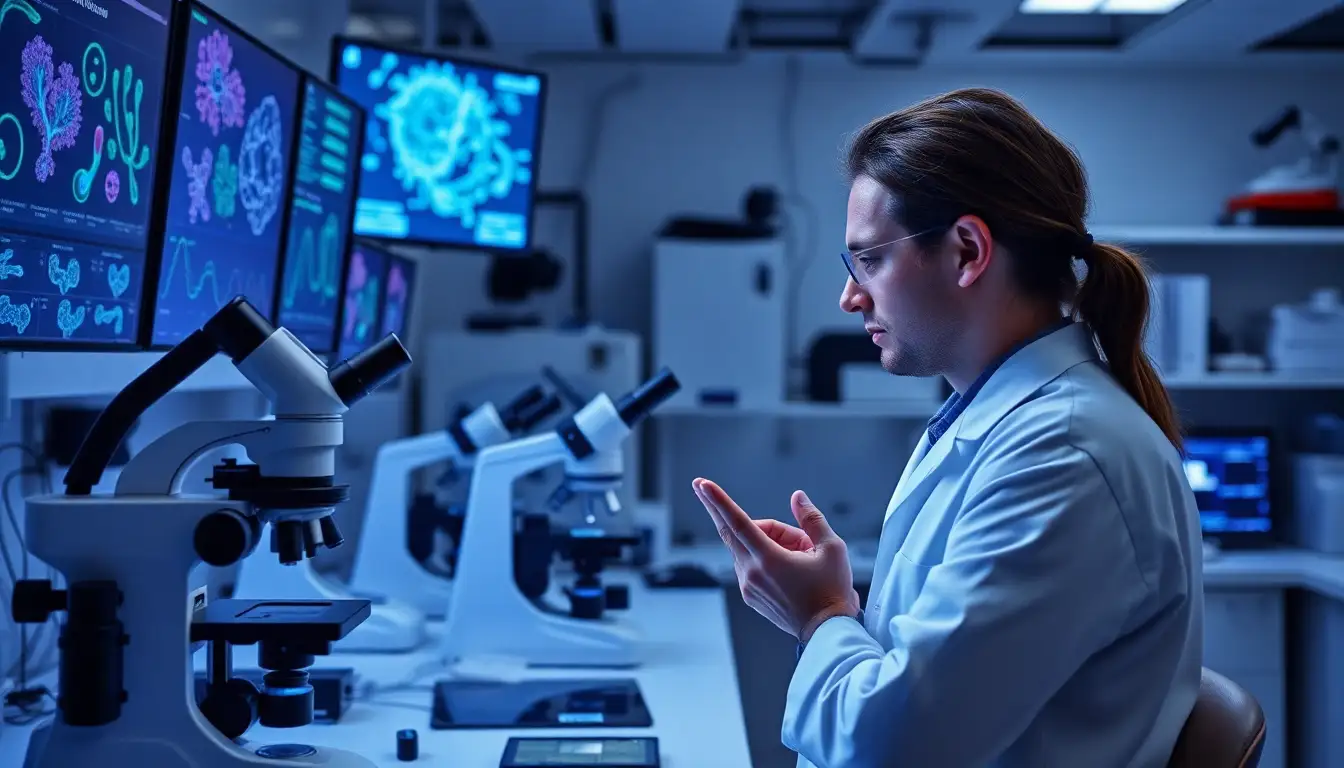
Anthropic, the AI company behind the Claude models, is stepping up to address this challenge with two major new alliances in the life sciences field. The Allen Institute and the Howard Hughes Medical Institute (HHMI) are joining as initial collaborators to push Claude into cutting-edge research, helping scientific teams collaborate more smoothly and tackle complex problems in biology and medicine. These partnerships blend Anthropics strengths in large-scale AI, intelligent agents, and model transparency with the institutions deep dives into biological and health-related questions. The goal is to place Claude squarely in the heart of lab work, creating a setup where researchers routinely enlist it for designing and carrying out experiments.
Transparency is a core focus for both collaborations, aiming to deliver tools that benefit the entire research community by making AI reliable for various scientific pursuits. Beyond just spitting out predictions, these AI systems need to offer clear, traceable reasoning that scientists can scrutinize and expand upon. Overall, the arrangements frame Claude as a booster for human expertise, not a stand-in, ensuring that any AI-driven findings stay rooted in solid proof and are easy for users to understand.
HHMIs partnership with Anthropic fits into the institutes AI@HHMI program, which is all about speeding up breakthroughs in biology. Centered at the Janelia Research Campus, a hub for innovative tools like sensors that track calcium in cells and specialized microscopes for brain structure, HHMI is well-equipped to integrate AI into the discovery process. The two organizations will work hand-in-hand on rolling out and refining AI technologies that adapt to actual lab demands. Kicking off in 2024, AI@HHMI has already kicked off efforts in areas like designing proteins via computation and unraveling how the brain processes thoughts. This tie-up will hone in on custom AI agents that pull together lab knowledge, advanced equipment, and data processing to quicken the research cycle.
Meanwhile, the Allen Institute is teaming up with Anthropic to create networks of AI agents tailored for handling diverse data types and probing the institutes key research domains. The project will test ways to orchestrate specialized agents dealing with everything from combining genomic datasets to managing knowledge networks, simulating changes over time, and suggesting experiments, all to cover the complete span of a study.
These multi-agent setups aim to shrink what might take researchers weeks of hands-on work down to mere hours, while highlighting connections that could easily slip by. They’re built to improve rather than override scientists creative thinking, allowing experts to steer the course while the AI manages the intricate calculations. For Anthropic, partnering with the Allen Institute means getting valuable input from everyday scientific routines, where precision and decision-making are crucial, helping uncover practical issues that lab settings reveal but simulations might overlook.
Moving forward, these alliances will shape the expansion of Claudes tools for life sciences, offering lessons on how AI can best fit into varied research environments. Anthropic remains dedicated to ethical progress that emphasizes accuracy, clarity, and empowering scientists to lead the way.