Now loading...
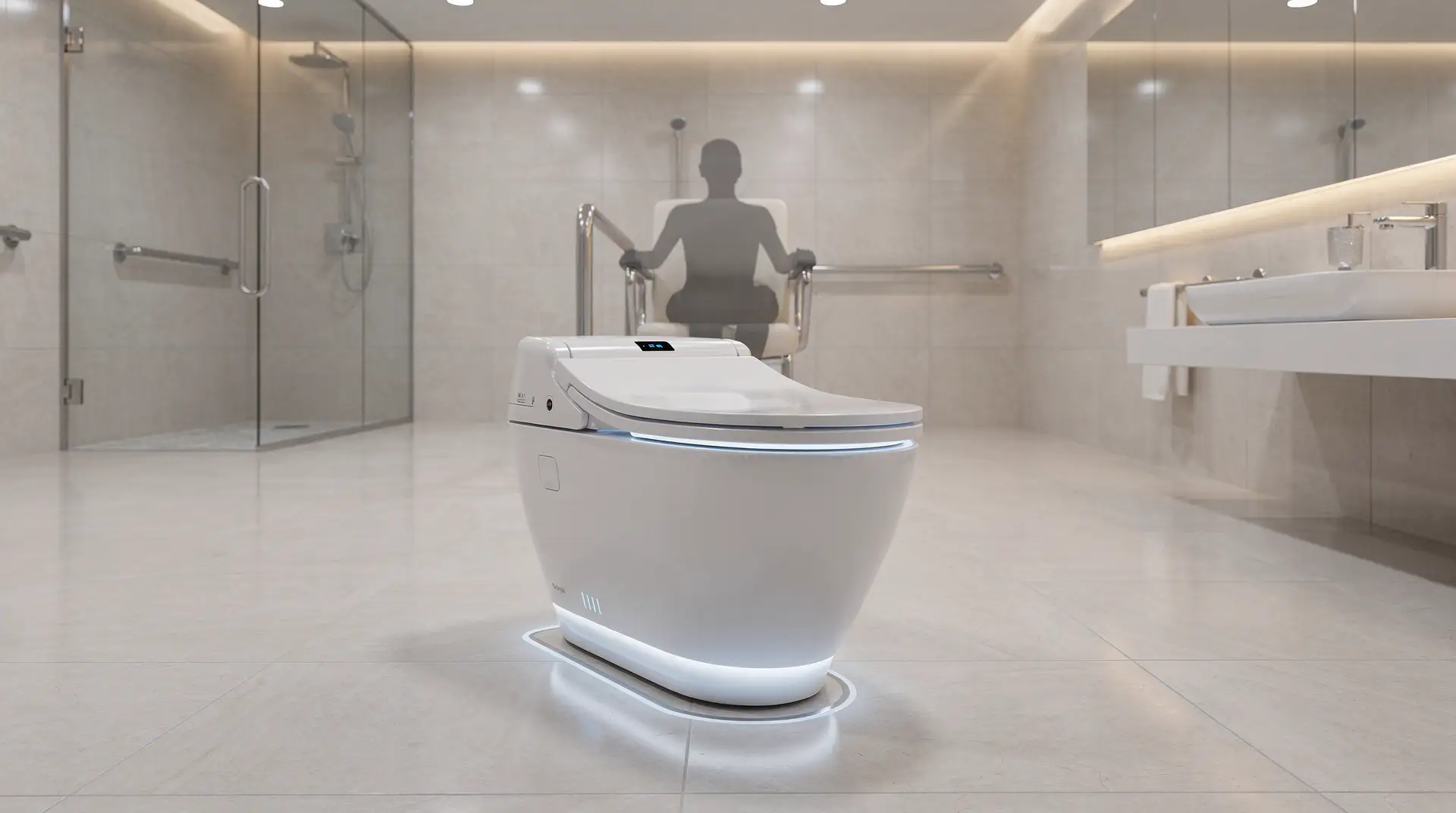
At a recent expo in Shanghai dedicated to assistive technologies, a Chinese company named Yueban introduced an innovative toilet that can autonomously navigate to users. The Xiaoban toilet aims to improve accessibility for individuals facing mobility challenges due to age, injuries, or disabilities. Priced at approximately ¥28,999 yuan, or around $4,300, its availability outside of China remains uncertain.
The Xiaoban employs technology akin to that found in top-tier robot vacuums. It’s features an variety of sensors, including lidar and ultrasonic technology, allowing it to autonomously determine safe paths in homes or care facilities while avoiding obstacles and stairs when summoned via remote or voice commands. While users may still require assistance with accessing the toilet, the Xiaoban eliminates the need to travel to a bathroom. Video demonstrations suggest the toilet effectively manages most tasks associated with its function.
In place of traditional toilet paper, the Xiaoban incorporates a built-in bidet and a warm air drying system to ensure user cleanliness. It also features a self-cleaning mechanism for the bowl and a system that seals waste in an enclosed receptacle. The inclusion of ultraviolet lights serves to neutralize bacteria, thus reducing odors and alleviating the discomfort often felt when using a toilet removed from a conventional bathroom.
Once a user has finished, the Xiaoban travels to one of two designated areas. If its charging dock is connected to plumbing, the toilet returns there to recharge, refill its reservoirs, and dispose of the pulverized waste to avoid blockages. In cases where the dock lacks drainage capabilities, the toilet will instead head to a regular bathroom, where an extendable arm transfers the waste for flushing. Although the Xiaoban does not replace caregivers entirely, it significantly lightens their workload by facilitating user access and managing cleanup afterward.