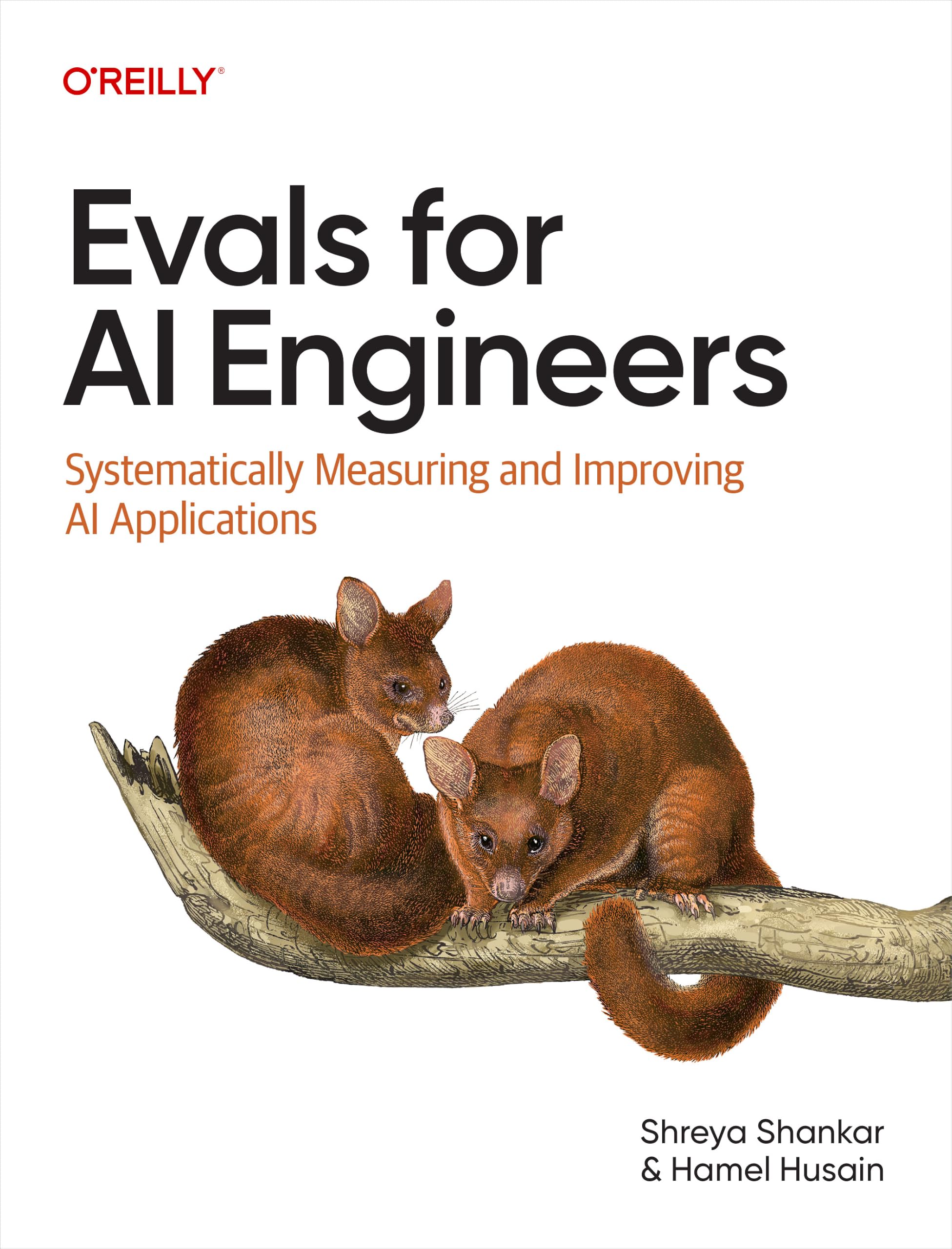
AI applications can look impressive in a demo and still fail in ways that matter once real people start using them. Evals for AI Engineers puts that gap at the center of its subject: how to measure an AI application systematically, then use what you learn to make it better. That’s a practical, valuable focus for anyone who has moved beyond experimenting with prompts and is responsible for building something dependable.
The allure is in the emphasis on a repeatable process rather than intuition alone. “This answer feels better” is not a reliable way to compare changes, catch regressions, or decide whether a system is ready to ship. A book devoted to evaluations suggests a more disciplined approach: define what good performance means for your application, assess it consistently, and treat improvement as an ongoing engineering task. For teams working with language models, that mindset can be as important as choosing the model itself.
This looks best suited to AI engineers and software developers who already have an application to test—or are close to building one—and want a clearer way to judge its behavior. It may also be useful for technical leads who need a shared basis for discussing quality across a team. If you’re hoping for a broad introduction to AI or a collection of clever prompt tricks, the title points elsewhere. The real value is likely to come from applying its evaluation perspective to a specific product and its actual failure cases.
- Read it with a concrete use case in mind. Bring examples of the tasks your application handles and the mistakes you most want to prevent.
- Turn vague expectations into criteria. “Helpful” or “accurate” can mean different things to different people; decide what those qualities look like in your context.
- Make evaluation part of the development cycle. The most useful measures are ones you can revisit when prompts, models, data, or product requirements change.
- Include edge cases, not just showcase examples. A system that succeeds on a polished demo may behave very differently with ambiguous or unusual requests.
The book’s strongest promise is its practical framing: improving AI quality should be approached as a process that can be examined, compared, and refined—not as a matter of crossing your fingers after a promising test. Readers will get the most from it if they’re prepared to do the work of adapting evaluation ideas to their own applications, users, and risks.
In short, this is a promising choice for practitioners who want to make AI systems more measurable and less dependent on gut feeling. It’s especially relevant if your team is shipping model-powered features and needs a disciplined way to tell whether a change genuinely improves the experience—or merely makes one example look better.