Now loading...
Figure AI has unveiled Helix 02, an advanced neural network system that enables a humanoid robot to manage its entire body using direct visual input, marking a significant step forward in robotics. Building on last year’s Helix model, which handled upper-body movements, the new version integrates walking, object handling, and balance into a seamless operation across a full room.
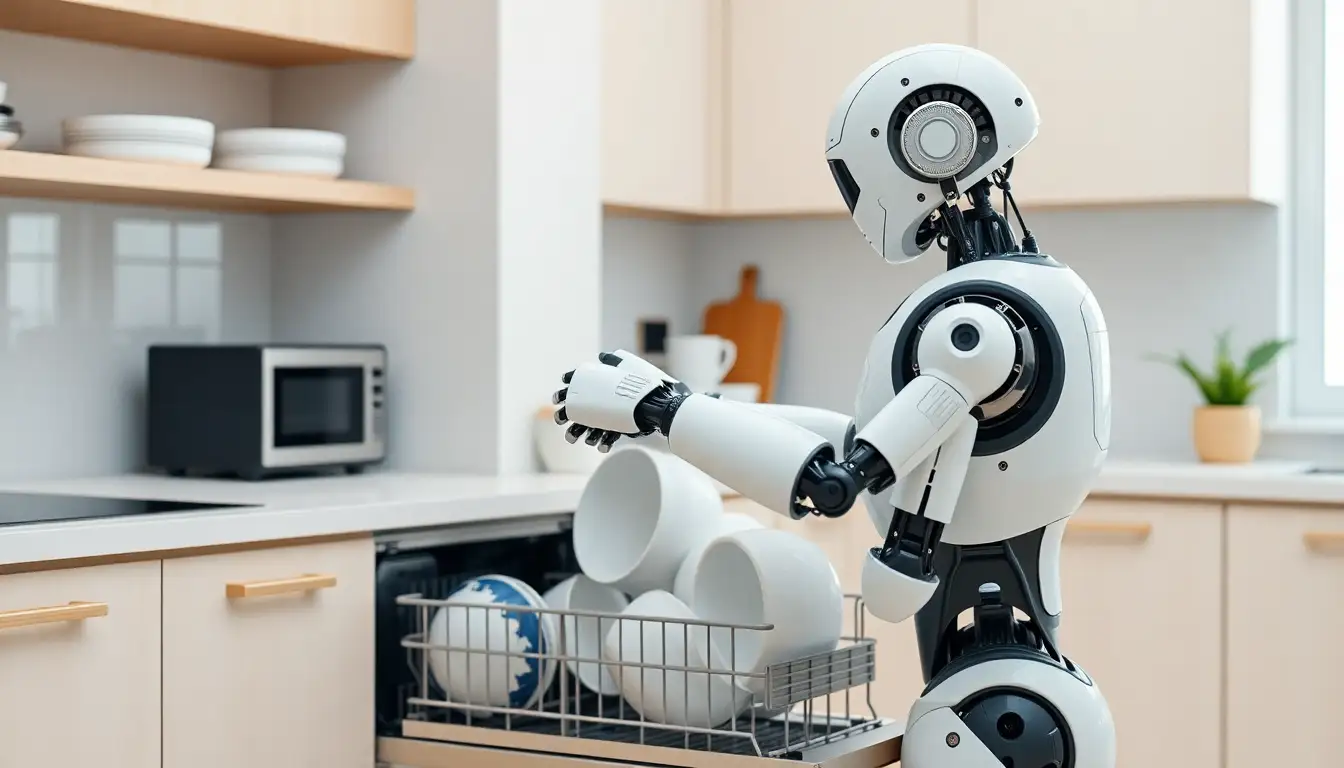
The system stands out for its ability to perform extended autonomous tasks, such as clearing and refilling a standard dishwasher in a kitchen setting over four minutes without any human help or interruptions. This feat combines navigation, precise grasping, and stability, representing what the company describes as the most intricate and prolonged autonomous activity achieved by a humanoid robot so far.
Helix 02 processes data from all onboard sensors, including cameras in the head and palms, fingertip touch detectors, and body position trackers, to direct every joint and limb through one cohesive visuomotor network. A key innovation is System 0, a controller trained on more than 1,000 hours of human movement recordings and simulation-based reinforcement learning, which substitutes extensive custom code with a neural model for fluid, balanced actions mimicking human motion.
The technology tackles long-standing difficulties in robotics, particularly in linking movement and object interaction. While robots have shown brief skills like jumping or posing, they often lack real-time adaptability. Traditional approaches divide these functions into separate modules prone to errors during transitions. Helix 02 addresses this by creating a unified framework that perceives the environment, makes decisions, and responds continuously, allowing the robot to adjust on the fly while carrying items or recovering from slips.
The architecture features three layers operating at different speeds. System 2 handles high-level planning, such as interpreting surroundings and natural language commands to outline sequences like approaching a dishwasher or transporting dishes. System 1 converts this into rapid joint instructions at 200 cycles per second, incorporating inputs from advanced hardware like palm-mounted cameras for hidden objects and sensitive touch sensors detecting forces as low as three grams. System 0 then refines these at 1,000 cycles per second for precise coordination and stability.
In demonstrations, the robot navigates a kitchen autonomously, using its whole body creatively, such as nudging a drawer with its hip or propping open a door with its foot when hands are full. It coordinates both arms for tasks like stacking plates and handles a wide range of motions, from tiny finger adjustments to large strides, all within the same network.
Enhanced sensing capabilities from the Figure 03 robot enable sophisticated manipulations. Examples include twisting off a bottle cap with controlled grip to avoid damage, selecting and extracting a single pill from a container despite obstructions, dispensing exactly five milliliters from a syringe under varying pressure, and isolating small metal parts from a jumbled box, as seen in operations at Figure’s BotQ facility.
Company officials emphasize that these achievements, while initial, highlight the potential for humanoid robots in homes and workplaces. Helix 02’s integration of perception, reasoning, and action paves the way for broader applications, with Figure AI inviting talent to join its efforts through open positions on its website.