Now loading...
NVIDIA has introduced two new open-source blueprints aimed at revolutionizing retail operations through artificial intelligence, addressing challenges in warehouses and product catalog management. The Multi-Agent Intelligent Warehouse and Retail Catalog Enrichment blueprints launched on Tuesday, offering developers tools to build customized AI solutions that enhance efficiency across the retail supply chain from storage facilities to customer wardrobes.
Tarik Hammadou, director of developer relations for AI in retail and consumer packaged goods at NVIDIA, stated that these blueprints will lower integration costs and enable quick deployment of applications. He emphasized that they provide the efficiency and scalability essential for the retail sector to remain competitive.
The tools will be highlighted next week at the National Retail Federation’s Big Show in New York, a major gathering for industry professionals. For more details, developers can explore the Multi-Agent Intelligent Warehouse blueprint and the Retail Catalog Enrichment blueprint.
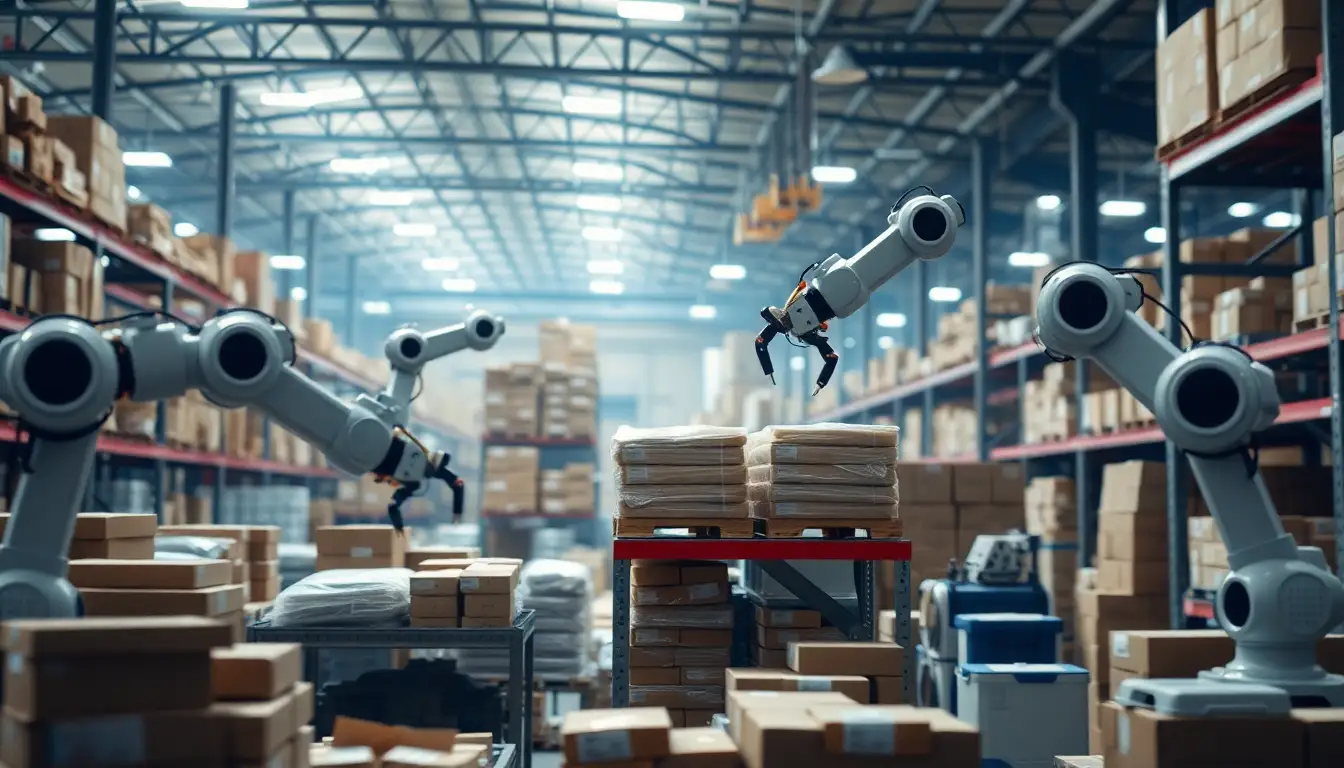
In bustling warehouses, where goods move constantly amid machinery and staff handling thousands of orders daily, disruptions like stock shortages or equipment failures can occur rapidly. A key hurdle remains the separation between information technology systems and operational technology, which complicates tasks such as tracking inventory, diagnosing tech problems and allocating personnel effectively.
Hammadou explained that positioning AI agents between these layers allows them to serve as effective coordinators, rather than layering AI directly on top of IT or OT systems. The Multi-Agent Intelligent Warehouse blueprint creates an integrated AI framework that overlays existing warehouse management software, enterprise planning tools, robotics and internet-of-things sensors, delivering immediate and transparent insights into operations.
This system includes dedicated agents for managing equipment, coordinating activities, ensuring safety, predicting needs and processing documents, all directed by a central operational assistant that reflects real warehouse processes. It transforms scattered data sources into actionable decisions.
For instance, a manager could query in everyday language about delays in packing, prompting the assistant to review equipment, task lists and staffing to identify the issue, provide evidence and suggest fixes like redistributing workloads or reprioritizing assignments.
The blueprint incorporates robust features such as role-specific access and policy safeguards to ensure trustworthy recommendations for equipment handling and safety protocols. It focuses on key performance indicators to identify and fix problems, maintain safety and meet order deadlines and service commitments, shifting warehouses toward reliable, informed routines instead of reactive firefighting.
Technology firm Kinetic Vision, which specializes in product development, plans to leverage the blueprint to address persistent supply chain challenges in retail. CEO Jeremy Jarrett noted that traditional charts are outdated, and the blueprint offers a unified approach to querying data and guiding choices.
Meanwhile, the Retail Catalog Enrichment blueprint tackles the common issue of incomplete product information, where images arrive with scant details, forcing teams to manually craft titles, descriptions and attributes, then adapt them for different regions and promotions. This tool employs generative AI to produce detailed, structured, localized and brand-consistent content efficiently.
Consider a retailer updating its website with simple photos of ceramic mugs. Using an NVIDIA Nemotron vision-language model integrated into the blueprint, the images can generate metadata on aspects like color, material, size, design and potential uses. From there, it creates tailored product names and summaries, standardizes features for better search and personalization, enhances online visibility and produces relevant lifestyle photos or 3D models suited to various cultures. An internal AI evaluator verifies the output for accuracy and uniformity.
Additionally, the blueprint generates marketing materials by incorporating brand style guides, voice and categorization rules along with images and target markets, resulting in customized titles, descriptions, categories, tags and adapted visuals.
Consulting company Grid Dynamics has developed a catalog system based on this blueprint to boost the reliability of product details and item statuses for major retailers. Chief Technology Officer Ilya Katsov highlighted that superior catalog data directly improves search and browsing for shoppers, a vital concern for online retailers seeking consistent attributes without manual oversight.
For large-scale operations with extensive inventories, gaps or errors in details arise frequently, worsened by integrating vendors with varied data formats, which can lead to misguided sales, customer dissatisfaction and eroded trust. Principal Software Engineer Dan Guja described how their solution enhances discoverability, enforces business standards across catalogs, refines data quality, better captures shopper preferences and promotes relevant items.
These blueprints fit into NVIDIA’s broader effort to infuse AI throughout the retail pipeline from backend logistics to frontend shopping. The warehouse tool aids supervisors and staff in supply and data handling, while the catalog solution streamlines creating engaging product pages. Complementary resources include the open-source Nemotron-Personas-USA dataset for diverse shopper simulations and an earlier Retail Shopping Assistant blueprint for conversational product guidance.
Hammadou added that future advancements will integrate physical AI elements into warehouses and stores, using technologies like computer vision to enable agents to perceive, analyze and respond to inventory and logistics issues autonomously.